//pagead2.googlesyndication.com/pagead/js/adsbygoogle.js
(adsbygoogle = window.adsbygoogle || []).push({
google_ad_client: “ca-pub-8867357168911159”,
enable_page_level_ads: true
});
Life has its ups and downs, its turbulence and its smooth flying. We sometimes stall, but hopefully, we change our attitude and recover to make a smooth landing.
I love flying. I am not a pilot, but I have been interested in flying for most of my life. I love watching pilots perform their pre-check routines. I study every move they make and try to identify every instrument on the panel; altimeter, airspeed indicator, vertical speed indicator, magnetic compass, attitude indicator, heading indicator, turn indicator, etc. If you ever see a nerdy guy sitting up front watching the pilot(s) perform their pre-flight checks, it’s probably me.
I’ve had the privilege of flying in private planes and charters. One of the coolest things is most of these planes have open cabins. You can watch out the front window and every move the pilot performs. I notice that pilots are always watching their instruments. While we gaze out the window trying to identify landmarks or enjoy the scenery, the pilot is intently focused on his instrument panel. One particular instrument, the attitude indicator, seems to be one they refer to and watch most often. In fact, it is placed in a prominent position within the panel, typically right in front of the pilot. While there are other instruments of importance, I believe the attitude indicator is placed in the most prominent part of the panel, because of its significance to the safe operation of the aircraft.
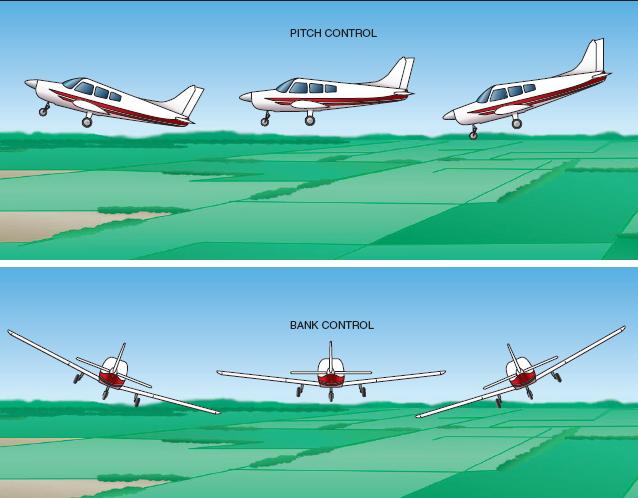
 The Attitude Indicator depicts the position of the airplane in relation to the real horizon. It shows whether the wings are level and if the plane is climbing or descending, or flying straight and level. A pair of wings represents the attitude of the aircraft in relation to the sky (blue) or ground (brown). Basically, if the wings are in the blue, the plane is climbing, if they are in the brown, the plane is descending. The attitude of an airplane indicates its performance. To modify the performance of an airplane, you must change the attitude.
Through my recent studies on personal attitude, I realize there is an analogy between the performance of an aircraft to the performance of a person. Just as an airplane’s attitude determines its performance, the attitude of a person will determine their performance.
What happens when a person attitude dictates unfavorable results? How can that attitude be changed? I believe the key to having a good attitude is the willingness to change. To change, one must choose to change.
If you want to achieve and maintain a good attitude, do the following:
- Evaluate your present attitude – Identify your problem feelings, behavior and thinking. Clarify the truth, secure your commitment and act on your decision immediately and often.
- Realize faith is stronger than fear – To succeed, one must have faith from the beginning knowing he/she will succeed.
- Want to change – When all else fails, desire alone can get you on the right track and keep you there.
- Live one day at a time – Success and failure follow us. Forget yesterday and focus on today. For what we do today, has an impact on tomorrow.
- Change your thoughts – What we focus on and remember, determines our actions. Our attitude is developed through our thoughts and feelings. Change your thoughts and feelings, and you will change your attitude.
- Develop the right thoughts – Our attitude is nothing more than our thoughts. It is as easy to form a thoughtful habit of success as it is a failure. Work to develop the habit of success through positive thinking.
- Choose to have the right attitude – The choice of a good attitude is just the beginning. Attitudes have a tendency to revert back to their original pattern. You must deliberately choose to have the right attitude.
The only way a person’s attitude can change is through their personal desire to change. As leaders, we can influence those we lead to change, but ultimately they make their own decisions. Just as an airplane’s performance changes with a change in attitude, so will the performance of an individual. But remember, attitudes can be bad or good. Make the wrong attitude adjustment in an aircraft and the results can be catastrophic. The same could be said for people. Make a bad attitude change, and the suffrage can be devastating.






 LEADER INFLUENCE