Influence is an overused word, but few understand the concept. Many think influence is manipulation, force, and/or intimidation based on their position or status within the organization. That is not influence, that is dictatorial power! Influence is an exchange of ideas, a persuasion of others to a known purpose or direction. Influence is gained through the respect of those who are to be influenced.
But what is influence? I want you to think of influence as salt. Salt is not a flashy spice  like cayenne pepper or nutmeg. Salt is merely a basic. And yet, it is essential. Without it, food is bland and tasteless. Without it, decay and rot ensue. In recipes, salt serves all the other ingredients by extracting and enhancing their fullest expression and flavor.
As safety professionals. You are in a profession whereby your ability to INFLUENCE others will be critical to the protection of life and safety. You must learn to influence like salt; in the background, without being visible or noticeable. It must become a part of your character and how you operate.
Why is influence so crucial in the safety profession? Influence is essential because safety professions typically have no authority and cannot MAKE people do anything. However, to have employees follow the policies and procedures, apply their training and follow directions, and ultimately achieve success, we must learn how to influence.
In fact;
we must learn to influence WITHOUT Authority!!!
 Throughout my years as a safety professional, I’ve found that there are more opportunities to influence than any other position within an organization. Think about it. Executives are relegated to an office. Managers and supervisors have assigned areas of responsibility and seldom venture outside of their designated area. They may understand the departmental dynamics, but not necessarily how it affects the rest of the worksite or organization.
YOU, on the other hand, have responsibility for the entire facility, region or area. Much of your workday is spent in the field or on the floor (or at least it should be!). Safety Professionals are expected to have a broad range of knowledge and an array of information concerning the business and are supposed to solve a full spectrum of problems. So think about all the opportunities to influence; practically every conversation, interaction, and the situation will offer a chance to influence.
However, not all safety professionals take the opportunity to influence like salt. No, a lot of us prefer to pour salt on the wound instead. Because we cover or touch all areas and all departments, we often become very familiar with organizational practices, the people and the dynamics of various personalities and relationships. In doing so, we become aware of problems, inefficiencies and identify opportunities for improvement.
This is both good and bad.
On the one hand, you can use this information to analyze the safety needs and influence for change. On the other hand, the Safety Professional tends to be solutions oriented and strives to solve everyone’s problems.
As a consequence, this mindset is often interrupted as “knowing how to do everyone’s job and do it better!” This has the tendency to isolate our position and decrease our influence. When we do things to decrease our influence, we decrease our ability to lead and ultimately get things accomplished by others. In their book, Influencing without Authority, Cohon and Bradford state “You need to INFLUENCE those in other areas, departments and division’s, those you don’t have control over.” You must learn to influence without authority.
I want to share with you an example of real influence. While flipping through a TIME 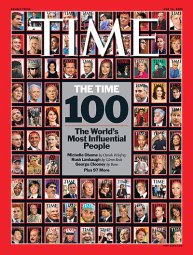 magazine issue listing the 100 World’s Most Influential People. Two individuals were listed, that I suspect are known to very few. Had influence been determined by a vote, I suspect that most readers would have never picked them. Their names are Brady Gustafson and Mary Scullion.
Brady, just 21 years of age, saved his fellow Marines when they came under direct attack in Afghanistan. Though Brady himself had suffered a life-threatening injury, he fought to save his friends and fellow Marines until help arrived.
Mary works tirelessly with an organization to help the homeless in Philadelphia, stating that “none of us are home until all of us are home.” As a result of her efforts, there are now less than 200 homeless men and women in Philadelphia.
These are real stories of influence. In society, influence generally indicates power over others, the power that inevitably reflects back on the one who is influencing. But for Brady and Mary, influence has very little to do with their own glory.
Indeed their influence is not about making a name for themselves, but rather about lifting up those without names and faces who have no influence or who most of the world will never know; homeless men and women and small-town young men who defend America.
What makes Brady and Mary so influential? I believe it is their behaviors. For Brady, he decided to take a risk to save others, knowing full well the potential outcome. However, his desire to defend and protect others generated a behavior that resulted in the saving of many lives. For Mary, it is having a subtle, but effective method of support to change the way the homeless population behaves.
So how does that relate to the Safety Profession? When we consider the process of eliminating injuries, one must consider behaviors as the single most crucial aspect of a person working safely. With that as the case, changing or modifying behaviors will reduce or eliminate workplace injuries.
How does one influence change in a person’s work behavior? The answer to this question is simple. You must influence the person to exhibit the right safe behavior because it is the right thing to do. To accomplish this, you must do the following;
- Realize your character will be crucial to having influence.
- Give encouragement. Start every conversation or interaction with something positive.
- Let them know you need them. Make sure you establish their importance in the organization.
- Create a memory of the conversation. People will refer back to those memories when they are in similar situations.
- Say the right words at the right time. What we say is very important in our influence.
- Encourage them to make the right choices and decisions.
- Remember, you are there to support and influence them. It’s not about you!
- Listen to what is not being said. Make sure you listen to understand before you reply.
- Find the key to their motivation. Everyone is motivated differently. You must learn how to motivate in short period of time.
- Be the first to help. If there are issues, look for realistic solutions and be helpful in solving problems.
- Everything is in a name. Use their name throughout the conversation. Nothing is more influential to a person than referring to them by their name during a discussion.
- Encourage them to work safely. Get their personal commitment to exhibit the right safe behaviors.
Our ability to influence others is the core of changing behavior and ultimately eliminating injuries. As Safety Professionals we must focus our efforts on becoming influential through our consistent interactions with all levels of the organization.
 integrated into the entire operational culture. I believe this is the only practical method for achieving safety and health goals and ultimately an incident-free culture. Safety and health should never be “first” or a “priority,” but rather a core value integrated into the culture of the organization. You see, priorities change, values do not and first is not always. I often use a pie analogy to visualize this. The pie is divided into equal pieces, with safety and health having an equal slice of the total pie. No more, no less, but equal.
 fact, I have been a crucial part of at least six organizations where a cultural change was required. I approach each opportunity by implementing these 10 principles. Execute these 10 principles and watch change take place.
 to embed there lives and way of thinking. In fact, that phrase indicates complacency has overtaken their ability to transform their results.
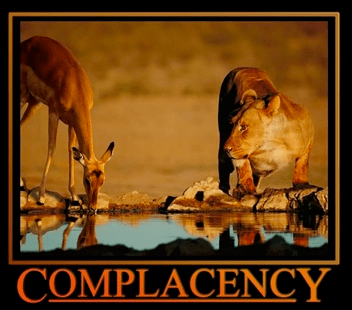 Complacency robs us of our success and achievements. It creates a way of thinking that blocks our ability to achieve the great things we desire. In fact, complacency sneaks up on us so fast that we don’t realize we’ve become complacent until someone points it out.
  Last Saturday morning I stepped out on my apartment balcony and saw several hot air balloons passing overhead. In fact, one was lifting off from the field across from the complex. As if I were a little kid, I excitedly called my wife over to show her the activity. She reluctantly came, and I began telling her how I was going to buy a hot air balloon, and I would take her up on a beautiful evening flight with a bottle of cabernet, and we would gaze into each other’s eyes into the evening sunset.
 There is a direct correlation between attitude and behaviors. A person’s behavior is affected by their attitude. Specifically, a person may do what is required when they must. However, remove the “must” situation, and they do what they want? Our attitude has an effect on others. Just as when one person honks in NYC, we all honk, our attitude will be contagious to many.
 Casey Stengel, a successful manager of the New York Yankees, had a conversation with a rookie manager named, Billy Martin.
 He told Billy this, “There will be 15 players who will run through a wall of fire for you, 5 who will hate you, and 5 who are undecided. When you make out the rooming list, always room your losers together. Never room a good guy with a loser. Those losers who stay together will blame the manager for everything, but it won’t spread if you keep them isolated.”
 our daily interactions with others and uses it to influence the desired conscience or sub-conscience outcome.
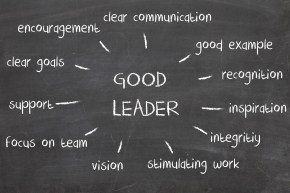 You have influence. Think about it. When you direct and instruct your kids, the conversations you have with your significant other and those at work or church. You never know who you’re influencing, so make sure you don’t waste the opportunity.
 I don’t think there is ever an instance where one person is the team, or where one person is responsible for the success or failure of the team. Whether at work or within the family, I believe it always involves a team effort.
 LEADER INFLUENCE