ACHIEVING CHANGE IN AN UNCHANGEABLE ENVIRONMENT

I recently began a new job with a large organization. The organization is somewhat unique to me because it consists of two legacy organizations each made up of multiple companies. Each organization operated independently until recently when ownership decided to merge the two legacy organizations into a single corporation with shared visions and goals.

“Change is achievable in any environment, as long as all layers are iniated in the change process.” – Denis Baker

I was hired to help create a transformational change where safety and health are Fotosearch_k27534040integrated into the entire operational culture. I believe this is the only practical method for achieving safety and health goals and ultimately an incident-free culture. Safety and health should never be “first” or a “priority,” but rather a core value integrated into the culture of the organization. You see, priorities change, values do not and first is not always. I often use a pie analogy to visualize this. The pie is divided into equal pieces, with safety and health having an equal slice of the total pie. No more, no less, but equal.

Whether your profession is safety or finance, the successful process of change is the same. Here are 10 principles to follow when initiating change. Execute these, and your efforts will be made fruitful.

1. Have compassion and understanding. Regardless of circumstances, change is scary, and you represent a terrifying unknown. Every location I visit, after we complete the professional introductions and small talk, I am met immediate resistance. And most will try and distance themselves. When I begin touring, asking questions and making suggestions, encounter looks of concern or frustration and often hear, “but that is not the way we do it,” or we’ve always done it this way.” To help soften my perceived impact, I often encourage their suggestions or solutions. This creates a great team-centered environment that allows them to consider any of my initiatives. Probably, the most important thing I’ve come to realize, is their reactions aren’t personal; they are just responding to an uninvited change.

2. Reach out and connect with those affected by the change. Success in anything cannot be achieved without effective relationships. Before a relationship can begin, one must first connect with the person or group. Do this by identifying common ground. Look for small wins that build respect and credibility.  In the beginning, change can be frustrating for both sides. It will be tempting to simply brush off questions or concerns, because you may feel it is easier to just do it. And it is. However, I BEG YOU to RESIST that urge! No doubt we want quick results, but you’re better off starting slow and finding common ground. Find opportunities for one-on-one interactions. For change to be successful, connecting with those affected requires consistent, realistic, heartfelt conversation.

3. Influence the influencers. Influence those who have influence, without neglecting the others. Pay attention to group dynamics and identify the influencers. Identify who they are, and get to know them immediately. Learn what they value and be transparent in addressing their needs, concerns or wants. Just remember, you can’t do or control what you don’t control.

4. Expect resistance and don’t ignore it. Resistance is always present for any change, especially culture change. Don’t think it will go away on its own, it won’t. In fact, if left unattended, it will multiply and infiltrate the entire organization. Once this occurs, your job just got tougher. Meet with the discontent. Put your pride aside and listen. Address each issue as it comes up, but don’t make any promises or commitments you can achieve. If that happens, you just lost all the trust and respect you’ve been working to achieve. Gain buy-in by understanding the reasons getting buy-in for your vision and goals for change. Realize that most of the resistors are the influencers.

5. Communicate your values. In the safety profession, it’tempting to withdraw when you encounter conflict, but you have to do the opposite. You’ve got to overcommunicate. Look for ways to demonstrate your values as you explain your vision. You want to reassure people that your principles are positive and show where your values align with theirs. The key is to be steady, positive and consistent.

6. Learn from other leaders. How do others achieve change? Read, ask and network, looking for ways and ideas that might work in your situation. I often tell people to go with their gut. Meaning, if your intuition is saying yes or no, then follow that “gut feeling” and move forward. As we say in the safety profession, “steal shamelessly.” Great leaders learn to steal the best ideas. Remember, their approach or tactics are vetted and proven.

7. Go forward boldly. Don’t be afraid to make mistakes. (Just be sure to fix them faster than you make them!) Stop and assess yourself, your process and your progress often, and course-correct as needed. Mistakes are inevitable. Keep it moving.

8. Prioritize and act. Identify the one or two areas where you will receive the greatest benefit and make that your priority effort. However, always evaluate your progress, the level of reception, the level of effectiveness and be ready to make changes as needed.Remember you are the change agent, you must be willing to change.

9. Create wins for the organization. Never underestimate the power of early victories. They give people confidence to keep pushing forward, even though turning the ship is hard. Achieving an early win builds momentum. People trust leaders with a proven track record. They will accept changes from people who have led them to victory before. Remember, it is easier to steer a moving train than stop it.

10. Identify and equip other leaders. If you want to sustain change and start building momentum, you must start developing and equipping the leaders. This is something many organizations fail at. We take the best worker and make them the leader. Great principle, but horrible execution. We tend to neglect the coaching and training needed to make that person successful. Look for those who rise to the top and pour into them your coaching and mentoring efforts to see them become the best leaders possible.

When I am looking for a job, I tend to identify companies where change is needed. In Fotosearch_k21722018fact, I have been a crucial part of at least six organizations where a cultural change was required. I approach each opportunity by implementing these 10 principles. Execute these 10 principles and watch change take place.

Influential Leaders Never Use These Phrases

Believe me when I tell you that I can offend even when it is meant for praise. We’ve all said things that people interpreted much differently than we thought they would. These seemingly benign comments lead to the awful feeling that only comes when you’ve planted your foot firmly into your mouth.I recently read an article by Travis Bradbury, author of Emotional Intelligence 2.0. It offered insight into what to say in a conversation. I thought I would share some highlights with you. 


1. “You look tired” – Tired people are incredibly unappealing — they have droopy eyes and messy hair, they have trouble concentrating, and they’re as grouchy as they come. Telling someone he looks tired implies all of the above and then some. Instead say: “Is everything okay?”

2. “Wow, you’ve lost a ton of weight!” – Once again, a well-meaning comment—in this case a compliment—creates the impression that you’re being critical. Telling someone that she has lost a lot of weight suggests that she used to look fat or unattractive. Instead say: “You look fantastic.”

3. “You were too good for her anyway” – When someone severs ties with a relationship of any type, personal or professional, this comment implies he has bad taste and made a poor choice in the first place. Instead say: “Her loss!”

4. “You always . . .” or “You never . . .” – No one always or never does anything. People don’t see themselves as one-dimensional, so you shouldn’t attempt to define them as such. These phrases make people defensive and closed off to your message, which is a really bad thing because you likely use these phrases when you have something important to discuss. Instead say: Simply point out what the other person did that’s a problem for you. Stick to the facts. If the frequency of the behavior is an issue, you can always say, “It seems like you do this often.” or “You do this often enough for me to notice.”

5. “You look great for your age”– Using “for your” as a qualifier always comes across as condescending and rude. No one wants to be smart for an athlete or in good shape relative to other people who are also knocking on death’s door. People simply want to be smart and fit. Instead say: “You look great.”

6. “As I said before . . .” –  We all forget things from time to time. This phrase makes it sound as if you’re insulted at having to repeat yourself, which is hard on the recipient (someone who is genuinely interested in hearing your perspective). Instead say: When you say it again, see what you can do to convey the message in a clearer and more interesting manner. This way they’ll remember what you said.

7. “Good luck”– This is a subtle one. It certainly isn’t the end of the world if you wish someone good luck, but you can do better because this phrase implies that they need luck to succeed. Instead say: “I know you have what it takes.”

8. “It’s up to you” or “Whatever you want” – While you may be indifferent to the question, your opinion is important to the person asking (or else he wouldn’t have asked you in the first place). Instead say: “I don’t have a strong opinion either way, but a couple things to consider are . . .”

9. “Well at least I’ve never…” – This phrase is an aggressive way to shift attention away from your mistake by pointing out an old, likely irrelevant mistake the other person made (and one you should have forgiven her for by now). Instead say: “I’m sorry.”

In everyday conversation, it’s the little things that make all the difference. Try these suggestions out, and you’ll be amazed at the positive response you get.

All You Are Is Full Of Hot Air! Moving From Words To Actions

c700x420Last Saturday morning I stepped out on my apartment balcony and saw several hot air balloons passing overhead. In fact, one was lifting off from the field across from the complex. As if I were a little kid, I excitedly called my wife over to show her the activity. She reluctantly came, and I began telling her how I was going to buy a hot air balloon, and I would take her up on a beautiful evening flight with a bottle of cabernet, and we would gaze into each other’s eyes into the evening sunset.

She looked at me and said, “All you are is a bunch of hot air.”

Hey wait a minute, I was romantic. Maybe that is why I was “full of hot air.” I am not well known for my romantic side.

Has anyone ever told you, you were full of hot air? If so, you are not alone. I think this post will help you understand why our words should not be hot air but rather backed up by the foundation of our actions.

It came to me that day while watching hot air balloons drifting overhead, that our words have a great impact on those we speak too. In fact, I realized that our words indicate our intended actions, but the follow-through is more important than any word in our vocabulary.

My intention is not to be a know it all, however, I think I know it all. If you don’t know it, then how will you solve it? Another, a fault I have is answering before I thought it out or committing before I realize what I committed to.  Had anyone ever say that to you? I hear it often because I talk too much. Regardless of the situation, I have the answer, and you will listen to it. My intention is not to be a know it all, however, I know it all. If you don’t know it, then how will you solve it? Another, a fault I have is answering before I thought it out or committing before I realize what I committed to.

I hear “you’re full of hot air, or that’s a lot of empty hot air coming from your mouth,” often. Probably because I talk way too much and have to get in everyone’s business to resolve everyone’s problems. Another, a fault I have is answering before I thought it out or committing before I realize what I committed to.Had anyone ever say that to you? I hear it often because I talk too much. Regardless of the situation, I have the answer, and you will listen to it. My intention is not to be a know it all, however, I know it all. If you don’t know it, then how will you solve it? Another, a fault I have is answering before I thought it out or committing before I realize what I committed to.

I know what you’re thinking, stop rambling and tell us what you are going to tell us.  Ok, Ok, got it. Here you go:

  1. Our actions build trust – Without trust, there is no influence, and without influence, there is no leadership. Deliver on what you say, and you begin to create trust.
  2. Our actions show personal responsibility – When, what we speak, is backed up by what we do, people begin to recognize the responsibility we have for achieving the desired outcome.
  3. Our actions create our reputation – You are known by your behaviors and the work you do. Make sure the things you say are truthful and backup by your actions.
  4. Actions show commitment – When we act, we validate our words, thoughts, and ideas.  We move from the verbal to the physical. Actions move our verbal commitment to the tangible result.

Our words are essential. They lay the foundation of our beliefs and our desires. However, they are merely words, actions prove our intentions and reflect our beliefs and desires.

Choose your words carefully, they must be backed up with actions.

stuffyoushouldknow-podcasts-wp-content-uploads-sites-16-2015-08-hotairballoons600x350

Real Integrity


I was talking with a group of people the other day when one of them began talking about how much integrity they had and how they strive to do the right thing always. That statement caught me by surprise because I know this person and have had many discussions concerning their lack of integrity. It made me realize two things.

  1. If you have to tell someone you have integrity, you probably don’t.
  2. Authentic integrity is built within a person’s character through their actions.

Genuine integrity is the foundation of a person’s credibility. Credibility creates confidence, and that confidence allows influence.

“Integrity is what we do, what we say, and what we say we do” – Don Gater.

Someone once said,

“You are already of consequence in the world if you are known as a man of strict integrity”.

That’s how essential integrity is in your personal life. In fact, if you have nothing else, authentic integrity will catapult you past everyone else.

Dwight Eisenhower said, “The supreme quality for leadership is unquestionably integrity. Without it, no real success is possible.”

I agree with Eisenhower. I cannot emphasize enough about the importance of having genuine integrity if you want real leadership in your life.

Integrity gives you so much credibility, trust, confidence, influence and much more.

Be a person of integrity and be a person who people want to follow.

TO COACH IS TO LEAD, 6 Principles to Effective Coaching

It was a scorching Thursday. Sweat was pouring down my face, and my shirt was soaked. As I was leaving the location, I overheard a supervisor conversing with an employee. I stood by (without being noticed) and listened to what was said. It seemed to be a one-sided conversation from the supervisor to the employee. I overheard the supervisor insult the employee over five times within 8 minutes. He kept telling him how “stupid” he was and how a 10-year-old could do the job better and more efficiently than he would ever be able to. The conversation and subsequent insults continued for another five minutes before the supervisor finally stopped and told the employee to go back to work.

As the supervisor began walking back to his trailer, I called him over and said I overheard his conversation with the employee and asked him a few questions. I started the conversation by stating that I only wanted to know if he felt his discussion would effectively improve the employee’s performance? The supervisor looked at me with his head slightly tilted, and his eyebrows raised and stated, “I don’t know; if not, I will fire him.”

I continued my questioning:

  • Will firing a person solve the overall performance issue?
  • What action (or lack thereof) generated the conversation?
  • Did he feel his approach was practical?
  • Have you had previous conversations with this employee over similar circumstances?
  • Do you feel you clearly and effectively communicate your expectations to this employee?
  • What could he have been done to involve the employee in identifying why he is not meeting your expectations?
  • Do you feel you are an effective leader?

Our conversation went on for quite some time. I could tell the supervisor was frustrated and had no idea where I was going and why I asked so many questions. Typically, no one would question what a supervisor was doing and why. However, after many questions, he finally admitted that he could have handled the situation differently. I asked him what brought him to that conclusion? He realized that embarrassing a person and threatening their job was not very effective. He also stated that he figured out why his crew would not talk to him or interact in conversations. He went on to say that he realized they were not interested in a relationship, and they were afraid to say anything. The next question is obvious, “What did he think he needed to do to change or correct the situation?” The supervisor looked at me and then the ground and back at me and said, I need to talk with the whole group and maybe start over. I agreed, shook his hand, and walked away.

As I was walking back to my vehicle, I realized something. Regardless of position, coaching is critical to effective leadership. If one can’t coach employees, are they able to influence? We know leadership is influence; John Maxwell made that clear. I believe the answer is no.

If you want to become an effective leader, you must become a competent coach. What is coaching? Coaching is a conversational process that aims to improve performance by focusing on the current or immediate performance rather than past or future performance. The coaching process is designed to allow a person to arrive at their conclusions or solve their problems by honestly answering the coach’s questions.

To become an influential leader, the supervisor or manager must transition from a controlling, intimidating, or monitoring role to a partnership between the manager and employee(s). This will create an atmosphere of shared understanding about what needs to be achieved and the process for obtaining it.

Don’t let the word “coaching” confuse you. The coaching process doesn’t mean a hands-off approach but rather an environment of involvement in the employee or group’s progress. One must move from a “checking and monitoring” philosophy to a progressive process for encouraging improved performance. Employees are not free to do as they wish; but are held accountable for their overall performance and meeting the established goals, plans, and timelines. To be active in the coaching process, you must become familiar with the basic principles of coaching and how it works. To better understand, I’ve identified six principles you should remember when coaching.

  1. Ask Don’t Tell. A coach is NOT an expert who gives advice, but rather someone who asks practical questions to bring the individual to their conclusions.
  2. Answers are Within. The answers are ALWAYS in the individual. The person is just not conscious of them at the time. The coach’s job is to bring the solutions forward.
  3. Power is the Process. The power is in the process, NOT the coach.
  4. No need for Experts. You do NOT need to know how to do something OR be experienced to coach someone to more excellent performance.
  5. Answers Inform, Questions Transform. The more non-directive you are (in questioning), the more powerful your influence. Asking a particular kind of question is the key to achieving the answers.
  6. The Process Works. Realize that coaching brings self-discovery, awareness, clarity, responsibility, and choice; it makes the unconscious conscious.

What will coaching do? It will build stronger bonds between you and your employees. It will also help them improve their performance by identifying and solving problems and issues before they affect performance.

Coaching is an excellent way to increase influence and improve employee performance, thus strengthening your leadership.

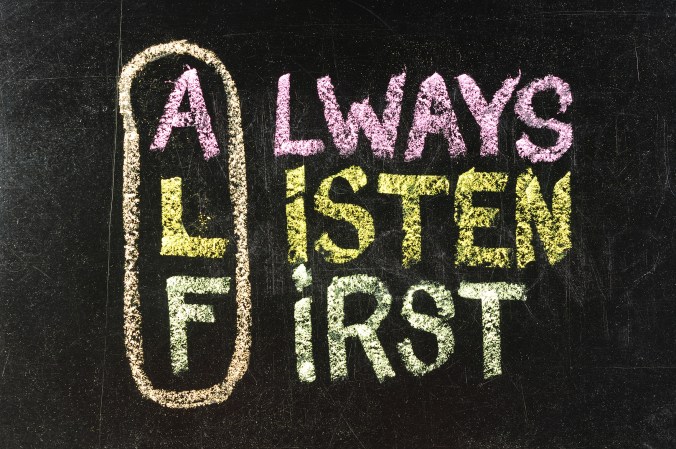
Listen First, Listen Second, Speak When You Understand

isten firstListening, a task I struggle at. As a coach, trainer and speaker, I tend to be a problem solver. In fact, I think I’m so good, I’ll finish your sentence or thought for you. Why should you waste valuable oxygen. However, I’m finding the oxygen we breath gives a person the ability to take a breath and speak their thoughts, concerns and ideas. In fact, when I allow people to finish their sentence and thoughts, I find many provide valuable solutions or ideas. So as I continue to learn how to control my attention and listen more, I am finding that; from listening comes knowledge and from knowledge comes a true understanding. From understanding comes the wisdom to support or help. And from wisdom, comes the ability to solve problems. The common saying; “God gave you two ears and one mouth for a reason”, continues to be true throughout the ages. Learn to listen, and you will be more successful.

INITIATIVE MAKES A LEADER, 30 Quotes That Encourages One to Take Initiative

InitiativeInitiative is something I write on often.  In fact, my last blog was on initiative, the concept of Ready, Fire, Aim. I continue to write on this subject, because it is something that seems to be lacking in the workforce and leaders in general.  And honestly, it is an area I seem to struggle in.

By definition, leaders cannot wait.  If they do, they are not leaders, but merely followers. I think initiative takes a little bit of faith bathed in risk.  Many times, you must take initiative on something with limited knowledge or insight and rely mostly on your intuition , or “gut felling”.

For those who want to be successful and effective leaders, one must take initiative.  If we never try, we will never know.  In fact, one will always be wondering, “what if”.

The hardest thing about taking initiative, is well, taking initiative.  To help motivate and encourage you to take more initiative, here are 30 quotes that will encourage you to take initiative.

  1. “Genius is initiative on fire”, Holbrook Jackson
  2. “Initiative is doing the right things without being told”, Elbert Hubbard
  3. “Without initiative, leaders are simply workers in leadership positions”, Bo Bennett
  4. “Employers and business leaders need people who can think for themselves – who can take initiative and be the solution to problems”, Stephen Covey
  5. Never relinquish the initiative, Charles de Gaulle
  6. “Success seems to be connected with action. Successful people keep moving. They make mistakes, but they don’t quit”, Conrad Hilton
  7. Be willing to make decisions. That’s the most important quality in a good leader. Don’t fall victim to what I call the ready-aim-aim-aim-aim syndrome. You must be willing to fire, T. Boone Pickens
  8. “I would rather regret the things I have done than the things I have not”, Lucille Ball
  9. “If you don’t make dust, you eat dust”, Motto of Jack A. MacAllister
  10. “Eagles don’t flock”,Ross Perot
  11. Even if you’re on the right track you’ll get run over if you just sit there, Will Rogers
  12. “An idea is worthless unless you use it”, John Maxwell
  13. “Destiny is not a matter of chance, it is a matter of choice; it is not a thing to be waited for, it is a thing to be achieved”, William Jennings Bryan
  14. “If your ship doesn’t come in, swim out to meet it”, Jonathan Winters
  15. “Everyone who’s ever taken a shower has an idea. It’s the person who gets out of the shower, dries off and does something about it who makes a difference”, Nolan Bushnell
  16. If opportunity doesn’t knock- build a door”-Milton Berle
  17. “You don’t drown by falling in the water; you drown by staying there”, Edwin Louis Cole
  18. “When eagles are silent, parrots begin to chatter”, Winston Churchill
  19. “Initiative is to success what a lighted match is to a candle”, Orlando Battista
  20. “The way to get started is to quit talking and begin doing”, Walt Disney
  21. “The few who do are the envy of the many who only watch”, Jim Rohn
  22. “Most people spend their entire lives on a fantasy island called ‘Someday I’ll”, Denis Waitley
  23. “Chance favors those in motion”, James Austin
  24. “Just begin and the mind grows heated; continue, and the task will be completed!”, Johann Wolfgang von Goethe
  25. “Two sure ways to fail: Think and never do, or do and never think”, Zig Ziglar
  26. “You can’t do everything at once, but you can do something at once”, Zig Ziglar
  27. “If you want to accomplish anything in life, you can’t just sit back and hope it will happen. You’ve got to make it happen”, Chuck Norris
  28. “You don’t have to be great to get started, but you have to get started to be great”, Les Brown
  29. “Implement now, perfect later”, Larry Winget
  30. The man who removes a mountain begins by carrying away small stones”, William Faulkner

Initiative and Success

READY, FIRE, AIM, The Initiative Concept for Leadership Abundance and Success

Ready Fire AimIf you know what to do, then just do it!  I could probably stop right there and have the shortest blog I’ve ever written.  But that would be boring.

As a leader, one of the most frustrating things is to have someone on my team not take the initiative to make things happen.  Instead they sit back and wait for direction, or constantly need my approval that their path or ideas are right.

I want people that are willing to take risks, learn from their mistakes and accomplish what they never thought could be done.  I encourage and expect my staff to embrace the idea of READY, FIRE, AIM!  A concept I learned years ago and I have refined recently.

Let me break the term down:

  • READY – Identify what needs to be accomplished and evaluate what it takes to fully and completely accomplish the task or idea.
  • FIRE – Go do it!  Don’t wait.  Be the swoosh in NIKE and “Just Do It.”  For my inner circle, there are very few times where this concept wouldn’t apply.
  • AIM – Once you “Do It”, then tweek as needed.  If you did your due diligence in the READY phase, there should be very little need to correct things.

These three simple words can create extreme success in your leadership and success in the workplace.

Here are three examples of people who embraced the concept of READY, FIRE, AIM:

  1. Elon Musk – When you make millions off of an internet company like PayPal, the world generally expects you to, well, create and make more millions off of another internet company. But Elon Musk’s dreams lay elsewhere: Rather than follow a more conventional career path, Musk took the money he had made at PayPal and invested it in two of his own highly innovative startups, SpaceX and Tesla. Though his attempt at operating these two ventures at once nearly sent both companies into bankruptcy, it seems to have ultimately paid off—today, both SpaceX and Tesla thrive.
  2. Sylvester Stallone – With a baby on the way and too little money to pay the rent on his Hollywood apartment, Sylvester Stallone sat down and wrote the screenplay for Rocky in less than four days. Producers loved it and offered him big bucks to bring the story to life—but Stallone, as down-and-out as he was, refused to take any offer if he wasn’t allowed to play the lead role in the film.  Rocky ultimately ended up pulling in millions of dollars and skyrocketing Sly into fame.
  3. Travis Kalanick: Uber – Travis is a great example of Ready, Fire, Aim.  If he become discouraged with failure, Uber wouldn’t exist.  Founded the company Scour Inc., a multimedia search engine, and Scour Exchange, a peer-to-peer file sharing service. Two years later, the company would come under fire from several big name music and film agencies for copyright infringement, forcing Scour to eventually succumb to bankruptcy.  In 2007, Kalanick and Garrett Camp founded Uber. After facing some early competition and funding concerns, the ridesharing app is now the most widely used app of its kind. Kalanick created three companies; one failed, but that did not stop him from taking the risk.

Taking initiative is an important part of most any job and is critical to increasing your influence and ultimately your leadership.  However, the reality is that not many of us will not end up as successful as Elton, Sylvester or Travis.  But I can say people who take initiative, are people I want in my inner circle.  And I bet that is the way many leaders feel.

I agree with Conrad Hilton said, “Success seems to be connected with action.  Successful people keep moving,.  They make mistakes, but they don’t quit.” 

Don’t keep talking about it, just “DO IT.”

swoosh

WHY DON’T YOU NETWORK

It amazes me how many people do not actively network. Even more surprising is the limited networking that many students do. For instance, using LinkedIn. If LinkedIn had been around when I was a student, there is no telling where my career would have gone. In my discussions with professionals, there seems to be common excuses for not networking. Here are the top three networking misconceptions I consistently hear:

#1: Networking is for self-promoting schmoozers – Networking isn’t solely the life of those desperate for a job. Networking simply involves making mutual connections. By tapping into our connections, we can share ideas, pass along opportunities, and benefit from one another’s expertise.

#2: Network is for salespeople – Wrong! Our professional success depends on the relationships we build. You may not be a salesperson and you may not be outgoing, but you can’t deny that networking is founded upon relationships. Regardless of your position or personality, you’d be wise to maximize your networking opportunities.

#3: Networking is uncomfortable, forced, and boring – We tend to imagine networking as speed dating awkwardly applied to the professional level. Nothing could be more inaccurate. The best networkers realistically share themselves (their talents, knowledge, resources) to benefit others.

Although the concept of networking has been tainted by mythical misconceptions, wise leaders know the importance of connecting and building relationships for professional success.

network community


AUTHENTIC INTEGRITY

I was talking with a group of people the other day when one of them began talking about how much integrity they had and how they strive to do the right thing always. That statement caught me by surprise, because I know this person and have had many discussions concerning their lack of integrity.  It made me realize two things.

  1. If you have to have tell someone you have integrity, you probably don’t.
  2. Authentic integrity is built within a person’s character through their actions.

Authentic integrity is the foundation of a person’s credibility.  Credibility creates confidence and that confidence allows influence.

“Integrity is what we do, what we say, and what we say we do” – Don Gater.

Someone once said,

“You are already of consequence in the world if you are known as a man of strict integrity”.

That’s how essential integrity is in your personal life. In fact, if you have nothing else, authentic integrity will catapult you past everyone else.

Dwight Eisenhower said, “The supreme quality for leadership is unquestionably integrity. Without it, no real success is possible.

I agree with Eisenhower. I cannot emphasize enough about the importance of having authentic integrity if you want true leadership in your life.

Integrity gives you so much as a leader; credibility, trust, confidence, influence and much more.

Be a person of integrity and be a person who people want to follow.

Integrity Seal