
As a Native Houstonian, I am experiencing survivor’s guilt. It is heartbreaking to see family and friends suffering, houses being lost from flooding every day. I moved from Houston 6 years ago, and there is very little I can do but pray and encourage. I am also a first responder in my heart. God has given me the talent to keep people safe, and I am unable to do that. Even though there are things I can do to help and support (and I am), I know that friends and families are struggling, anxious at not knowing what the future brings. As of writing, there is still the possibility of an additional 15-30 inches of rain. Pray for their safety, peace, and sanity. Pray that they will know that ultimately good will come out of this catastrophic disaster.
In fact, I already see the good being done. In a nation where there is a focus on the debate over race, religion, and income equality. In a time where the country criticizes every decision made by local, state and federal governments. Where unity is but a distant hope, I see the people in the nation’s fourth largest city and surrounding areas, banding together in solidarity to help their neighbors, friends, and family.
I see the rich and poor, people of all ages, races, religions and rising up  and becoming leaders within their homes, families, and neighborhoods. I see leaders taking time off of their jobs and coming from all over the United States to support and save lives. I see leaders donating money, food, clothes and goods and their time for those who have lost everything. I see leaders risking their lives for others. I see churches and organizations opening their buildings up shelter, clothe and feed those in need. I know there are some working and staffing those shelters that are facing or have lost their home, have family in desperate need and are experiencing the same anxious thoughts as anyone else. But rather sulk in their despair and hopelessness, they chose to serve others and make a difference.
I SEE PEOPLE SACRIFICING THEIR COMFORTABLE LIFESTYLES FOR THE BETTER GOOD OF MANKIND!

What the Houston area is witnessing is called, Servant Leadership. Serving others unselfishly with little or no regard to their circumstances. Out of this Servant Leadership, I see something much deeper occurring. I call it Transformational Influence. Leaders making a difference in people’s lives by influencing through their generous serving of others, and positive and encouraging conversations. They possess a positive attitude regardless of the situation or circumstance. Transformational Influence is a term I created from witnessing the transformation of people’s lives through conversation, prayer, and commitment to others. Transformational Influence occurs when we affect the way a person thinks, acts or behaves through our conversations, personal actions or simply our intention.
How can you have Transformational Influence in a time of crisis?
 Use this catastrophic and tragic situation to transform the lives of others through your Servant Leadership. Have Transformational Influence on those you come in contact with.
To the people of the greater Houston Area……..Continue to UNITE and Serve One Another! Show the world why Texas is the Best!
To those who have traveled to the area to assist……THANK YOU! Your commitment and service will be remembered for generations to come.

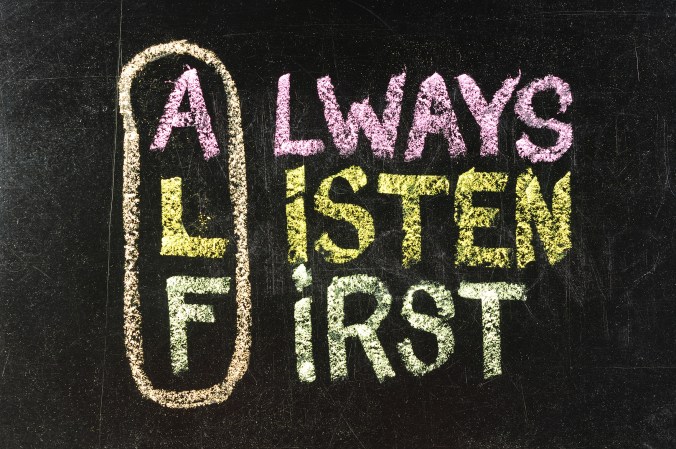 Listening, a task I struggle at. As a coach, trainer and speaker, I tend to be a problem solver. In fact, I think I’m so good, I’ll finish your sentence or thought for you. Why should you waste valuable oxygen. However, I’m finding the oxygen we breath gives a person the ability to take a breath and speak their thoughts, concerns and ideas. In fact, when I allow people to finish their sentence and thoughts, I find many provide valuable solutions or ideas. So as I continue to learn how to control my attention and listen more, I am finding that; from listening comes knowledge and from knowledge comes a true understanding. From understanding comes the wisdom to support or help. And from wisdom, comes the ability to solve problems. The common saying; “God gave you two ears and one mouth for a reason”, continues to be true throughout the ages. Learn to listen, and you will be more successful.
 Why is leading myself more difficult than leading others? I ask myself this question EVERY SINGLE day!
Why do I say or do things I know are wrong (there is a biblical reference here)? It happens at home, work, with my wife, with my co-workers and those I love and lead.
The answer is simple. There are areas I don’t see until they sprout up. In fact, I believe there are times I don’t see myself from a realistic point. I see myself from my intentions, AND others see me through my actions and words. I should probably also admit that I see my intentions from the training and talks I give.

While I speak of myself, I am sure I’m not alone. But how does one address this issue? Answer, look for the blind spots and deal with them! However, how do we identify the blind spots? I look personally to three source for my self-leadership:
These sources provide direct and/or indirect insights to the areas I need to change or improve. With this information, I can apply these five principles.
Take the time to evaluate the effectiveness of your self-leadership to these five principles. Then establish a process where you consistently work to apply these principles and improve where needed.
A leader’s greatest challenge and most difficult task, is self-leadership. If you lead yourself correctly, you will influence others and they will follow. Failure to manage your self-leadership will create a loss of respect and the inability to influence, causing people to leave and follow others.

I’ve been told many times I’m a passionate person. I guess that’s accurate. I have a passion for my marriage, my family, for employees to work safely and I have a passion for leaders to lead . In fact, pretty much my entire life seems to always reflect my passions. I can’t go anywhere or have a conversation with anyone without talking about my wife, my grand daughter, safety or leadership.
I want to passionately influence people!
Passionate people sustain their efforts until they make a difference. It drives them to do more, accomplish more, learn more and put up with more. One thing I often tell my coaching clients is,
“If you love what you do, you’ll do more of it, so find what it is you love”
I recently became intrigued as to why people think I am a passionate person. As I sat down and begin recalling conversations and asking questions, I found that most answers pointed to 8 reasons why I am a passionate person.
Here they are:
We have all been passionate about something. But maybe the passion has died or subsided through out the years. My purpose for this blog is not to arrogantly announce that I am a passionate person, but rather it is an attempt to show you that passion is found in what you love. Find what it is you love, cherish and hold tightly to.
John Maxwell ask these three questions to help others find their passion:
What are you passionate about?

 I recently published a blog titled, “8 Personal Habits That Will Ensure A Good First Impression.” Number 8 on that list was “Initiate Relevant Small Talk”. I discuss the need for relevant small talk and how it can create a connection and lead to building a relationship. Effective small talk can provide clues in providing a deeper understanding of that person.
Recently I came across an article titled; “15 Tips to Get Better at Small Talk”written by Patti Johnson with SUCCESS Online.
I wanted to share it with you as I found it to be a great companion article addressing the issue of small talk.
If you spend the week anticipating and worrying because you know you will feel uncomfortable, you’ve set yourself up for failure. Remember why you are going—to celebrate a friend on his or her special day, to meet others who share your interest or connect with your co-workers.
Take a look at who else will be there and plan to meet those who might share something in common. This might be someone who knows a mutual friend, a fellow baseball fan or a business owner living your dream.
Trick your mind into making it seem easier and more fun. Commit to at least an hour. Plan to meet at least five people. Challenge yourself to learn two new things This mind shift can help tame the anxiety and make the conversation more fun.
Don’t wait for others to approach you. Say hello first. When you expect others to make the first move, you’ll be disappointed. And the more you do it, the more comfortable you’ll be.
Rather than being the shadow of the one person you already know, branch out.
Starting a conversation with a new person can be hard. Try, “How do you know _____?” “What is keeping you busy these days?” or “What brought you to this area?” It doesn’t have to be complicated, just something to get you started if you you’re new acquaintances.
Asking questions is the secret ingredient to interesting conversations. Stay away from yes/no questions. You can naturally start with easy questions that feel natural, but listen for an interesting comment to explore and build upon.
As an example for how your questions might flow:
Within a few questions, you can move to more substance and a real conversation.

No one likes the fake networker. In the interest of being more outgoing, don’t be someone you aren’t. Putting out effort doesn’t mean being fake.
Find something that you can genuinely compliment the other person on and then shift to a question so it isn’t awkward.
Every conversation runs its course, but a natural end is hard. Just say, “It’s been great to meet you, and I hope you have the best vacation next week.” Excuse yourself to do something else and move on.
I recently went to a large celebration event and only knew the busy host. I noticed another guest taking her time at the snack table and introduced myself. We had a great conversation while those around us caught up with longtime friends.
If you are talking with someone and another guest looks a little uncomfortable, invite him or her into the conversation. Remember the times when you were that uncomfortable person and try to include others.
Your favorite topic isn’t everyone else’s. You might love your new grill or your favorite book or TV show, but don’t assume everyone else is interested. Gauge the conversation and flow with it.
Not every get-together will result in new friends. That’s OK. You still accomplished your goal of going when it was easier not to—you were there supporting a friend or a co-worker. And that is enough.
Don’t constrain this habit to social events. Say hello to the person next to you on the plane before you grab your headphones (I’m working on this). Talk to your waiter. Ask your Uber driver about his day. The habit of saying hello and listening is a muscle you can develop by working on it every day.
Try some small talk. You might be surprised where it takes you.

I read an article the other day that touched on leadership behavior. It sparked an abundance of memories, thoughts and questions that have rolled around in my head for many years. Quite frankly it made me look deep inside of my soul and check my heart to ensure my actions and motives line up with my moral convictions.
Look, leaders are people. In fact, many are good people. There is a very small percentage of leaders that act and behave poorly. I feel I’ve probably worked for more than most. My career has been full of poor leaders. Heck, there are a lot of my past and present employees that might say the same about me.
The whole reason I began my leadership journey was to do everything I could NOT to make the same mistakes or do the same things I have witnessed or gone through.
Through my experience, I have identified 9 things that define poor leaders. Here they are;
 care what you did or where you went. It is about those you lead. When every conversation and situation is about you, it limits the interaction and contribution of others. I’ve had many leaders more concerned about how situations affect them, than the one(s) involved or affected.
 How is the company performing?, Will there be raises or bonuses this year? As I coach leaders, I encourage them to have weekly or monthly communication meetings. This is a time where all they do is communicate key information and allow employees an opportunity to ask questions.
 the answer. Cynical leaders say; “No, that’s not going to work” or, “I don’t know why we are doing this; this is stupid.” Look, if something is stupid, then the leader needs to fix it. If something is not worth doing or is going to create major problems, it’s your responsibility to facilitate other ideas. Regardless, you must thank and encourage those who offer ideas and opinions, not BELITTLE them!
 respect, you can’t influence. If you can’t influence, you can’t lead. In addition, when a leader lacks integrity, he gives employees permission to do the same. I’ve seen leaders compromise their integrity and moral values to be validated by others. I have personally seen this take place and the destruction it causes. A true leader will never comprise their moral integrity for validations.
Being a leader is about doing the right thing and leading by example. You simply cannot have one standard for yourself and one for everyone else. Treat people the way you would want to be treated.
If some of these sound familiar, then do something to correct them immediately. The longer you continue the easier it is to continue.

As you consider 2016, commit to what makes you better, not what makes you a liar.
Resolutions will make a liar out of you every time! Instead, focus on the things you can control and achieve. It is all about your principles.
Here are 11 principles I am committed to in 2016.
You can have everything in life you want, if you will just help enough other people get what they want.”
 Learn to fail forward. Your approach to failure will have an impact on the outcome. Embrace the failure and use it to gain success.
 My goal is to read at least 1 new book per month. Reading gives me a lot of my ideas and creates a sense of knowledge for solving most problems. If I don’t know the answer, I read. Commit to attending meetings, conferences and training that stretches you and provides a greater expansion of your personal and professional knowledge.
I quit making New Year’s Resolutions a long time ago. Ok, Ok, Ok, I will eat less fatty foods, cut down on the sweets (maybe) and exercise more. I never succeeded or followed through with many of my new year’s resolutions. Instead, I’ve learned to identify things I would do daily, monthly or throughout the year to make me an overall better person.
That’s how I came up with these 11 things. This isn’t the first time I wrote these. This has been my life for the last few years. These 11 principles continue to mold and shape me and will make me a better husband, father, GRANDFATHER (in April), professional, leader and overall a better person.
 Want to increase your influence? I think the 10 actions and concepts below will help you. As you have probably heard me say or read John Maxwell’s writings, he defines leadership as Influence,Nothing More, Nothing Less. I work daily to increase my influence. However, I’ve come to realize that influence takes time. It requires consistency and tenacity. Try these actions and concepts. Practice them often and stay you will increase your influence.
Read it…….it’s less than a 1000 words!

We all have influence, big and small. We all have things we are gifted or good at. Things we leverage by adding value to others. Whether it is our attitude, problem solving skills or simply just our ability to laugh, we should be sharing our knowledge, experience and influence. Employees respond to influence. We should work hard to increase our influence by adding real value everyday. Do this and you will increase your leadership. You’ve heard it before, Leadership is influence, nothing more, nothing less. Go have influence on others!!
 LEADER INFLUENCE