You Told Them!

A very short blog to help you not make the same mistakes I did!

I learned a very valuable lesson recently. In an attempt to ease anxiety and comfort someone, I shared something that I had knowledge of I thought would help to relieve the anxiety and stress that a colleague was experiencing. Unfortunately, that information did not stay where it should. Instead it was used as a source of control, power and position, eventually getting back to the person that originally trusted me with the information. This put them in a very difficult position. 

Needless to say, I was informed by a text that simply said, “you told him?”

Wow, shock, awe and anger all welled up inside of me. I wanted to run and hide and ignore what I just read.  My gut was in knocks. I had just betrayed someone that trusted my with information. Information a senior leader in the company should have kept private. I didn’t. I used it to show my position and my arrogance of knowledge and information.   What a dummy!!!

However, I learned a lot from this;

  • You should not say anything to anyone that you wouldn’t say to them. Will it pass the red face test?
  • People will use information in order to gain influence and credibility for themselves. 
  • You must quickly iniate a dialogue with the person whose trust you betrayed. 
  • Show true humility in acknowledging your wrong doing. And sincerely apologize with immunizing the situation. 
  • Recognize your need to rebuild that trust. 
  • Immediately forgive the person that betrayed your trust. It is not their fault. You are the one who told them something you weren’t suppose to.  
  • Realize NOTHING is sacred from ANYONE at ANYTIME. If people can use the information for gain in position or influence, they will take the risk of betrayal. 
  • Work should be work and you should always understand the information you get at work is part of your job. Telling any confidential information to others is a job performance issue. 

I have personally learned this through my own stupidity and lack of good judgment. 

Even when you are trying to put someone at ease and share information, you must understand the risk level and the need for confidentiality. 

Leaders must remember we are leaders all the time, every time through every situation. We must always calculate our next move, check our hearts and motives and always do the right thing. 

Chuck Swindoll said, “If you want to be miserable, live only unto yourself. Think only about your own needs and desires.”  I believe we need to always check out heart and determine our motivation and desires. 

It’s not about you!!!!!!!
 

REALLY, YOU LEAD PEOPLE?

Fotosearch_k15793683

I read an article the other day that touched on leadership behavior.  It sparked an abundance of memories, thoughts and questions that have rolled around in my head for many years.  Quite frankly it made me look deep inside of my soul and check my heart to ensure my actions and motives line up with my moral convictions.

Look, leaders are people.  In fact, many are good people.  There is a very small percentage of leaders that act and behave poorly.  I feel I’ve probably worked for more than most.  My career has been full of poor leaders.  Heck, there are a lot of my past and present employees that might say the same about me.

The whole reason I began my leadership journey was to do everything I could NOT to make the same mistakes or do the same things I have witnessed or gone through.

Through my experience, I have identified 9 things that define poor leaders.  Here they are;

  1. IT’S ALL ABOUT YOUNo it isn’t!  In fact, we probably don’t About.me_iconcare what you did or where you went.  It is about those you lead.  When every conversation and situation is about you, it limits the interaction and contribution of others.  I’ve had many leaders more concerned about how situations affect them, than the one(s) involved or affected.
  2. HEY BUDDY -Considering those you lead as friends.  Not good. Leadership is about relationships, not friendships.  When friends and buddies don’t perform we tend to “sweep” it under the rug or make excuses, rather than hold them accountable.  This creates descension and frustration with other employees.  Build relationships, not friendships.  I’ve seen many leaders lose credibility over the hiring or advancement of friends or relatives many times.  I am not saying you can’t hire employees from the past or those who supported and assisted you at other jobs.  I was the best man at my Director of EHS’ wedding 29 years ago.  However, I bet he will tell you that he is held to the same accountability level as anyone else.  In fact, I expect more out of him, than most.
  3. HORRIBLE LISTENER blah, blah, blah…….  This leader doesn’t care what you have to say.  They are only concerned with what’s coming out of his mouth.  Their EGO gets in the way.  Hey man, you were given 2 ears and 1 mouth for a reason.  You need to listen twice as much as you talk.  Give people a chance to say something.  Who knows, what they have to say might solve the problem.
  4. WHAT ARE YOU THINKING? -Poor communicators can reduce and harm aculture and frustrate employees quickly. Many employees complain about the lack of communication from leadership.  What are my expectations, Fotosearch_k10378786How is the company performing?, Will there be raises or bonuses this year?  As I coach leaders, I encourage them to have weekly or monthly communication meetings.  This is a time where all they do is communicate key information and allow employees an opportunity to ask questions.
  5. DON’T TEXT ME -Technology is great, but technology has created a diminishing environment of face to face communication.  How many times have you received a text or email and interrupted it as negative?  Texting and emails are very difficult to communicate a tone.  A face to face visit is the best way to properly communicate.  I can see your facial expressions and body language and I can react or change my tone or words to ensure effective communication.  If you can’t meet face to face, call them, and don’t leave a voice mail to cover your items.
  6. REALLY?Hear’s a thought……Get both sides of the story before you make a decision.  One of the most frustrating things for employees is when a leader makes decisions based on a one sided conversation.  One of the traits of a leader is to be open and accessible.
    However, that doesn’t mean you base your decisions on the conversations of one individual.  I found many times, my accessibility and openness has allowed individuals to voice their displeasure with a supervisor, rule or practice only to find out in my follow-up conversation the individual was disciplined or held accountable for failure to comply with or follow directions, etc.
  7. THAT WILL NEVER WORKBeing cynical is not a trait of a leader.  In fact, it is totally opposite.  I think cynical leaders feel threatened. They must discount or even put down a person’s ideas because they feel as if they are not a leader if they don’t have Fotosearch_k5253244the answer.  Cynical leaders say; “No, that’s not going to work” or, “I don’t know why we are doing this; this is stupid.”  Look, if something is stupid, then the leader needs to fix it.  If something is not worth doing or is going to create major problems, it’s your responsibility to facilitate other ideas.  Regardless, you must thank and encourage those who offer ideas and opinions, not BELITTLE them!
  8. THAT’S DISGUSTING! Just because you can say it, doesn’t make it right.  Foul language is wrong and unprofessional.   For some reason, leaders feel they have the right to use foul language and tell questionable stories in front of their staff or employees.  I recently had a leader use very disgusting language in reference to a football game. It stunned the group.  No one knew how to react.  I have had several occasions where leaders would use foul language in an email or text.  Regardless of the communication, it is WRONG!  Some have told me, “you have to talk in the language of the industry”. What?  Come on man!!  If that is the case, then we need to clean up the industry!  It doesn’t matter if you are playing, it is your normal language or if you are angry, foul language is wrong, no matter what!  Whether it’s anger, disgust or this is how you talk to your friends, you can’t bring it to the office.
    I can tell if a person has leadership qualities by the way they talk to others.
  9. YOU CROSSED THE LINE!Leaders who compromise their integrity for business or profits are FOOLS!   A lack of integrity from leaders doesn’t just annoy employees, it appalls them. In fact, when a leader shows a lack of integrity, employees become de-motivated.  When a boss breaks or fudges the rules, cheats, lies or indulges in behaviors that reveal a lack of moral principles, he loses respect. images7-220x147 respect, you can’t influence.  If you can’t influence, you can’t lead.  In addition, when a leader lacks integrity, he gives employees permission to do the same.  I’ve seen leaders compromise their integrity and moral values to be validated by others.  I have personally seen this take place and the destruction it causes.  A true leader will never comprise their moral integrity for validations.

Being a leader is about doing the right thing and leading by example. You simply cannot have one standard for yourself and one for everyone else. Treat people the way you would want to be treated.

If some of these sound familiar, then do something to correct them immediately.  The longer you continue the easier it is to continue.

WHEN THE EARTH CREATES SHAKY LEGS, A Leader Must Remain on Solid Ground

Fotosearch_k21692991It was 5:39 am.  My wife and  I were laying in bed trying to motivate ourselves to get out and start our day.  As we were laying there, I heard a loud rumbling noise, felt the bed shake violently and heard the windows and pictures shaking.  Things were falling and breaking.  My wife started screaming and I grabbed her and laid on top, protecting her from the falling roof.

We had just experienced a 4.3 magnitude EARTHQUAKE!  This scared the tar out of us!I remember getting out of bed (had no problem getting out now), opening the bedroom door and noticing items on the floor.  Walking around the corner, I saw more and more things that had fallen over or fallen on the floor.  We were lucky, nothing broke and the roof didn’t fall on us.  After calming myself down and holding tight to my shaking wife, I realized everything was ok.  Getting out of bed, I noticed my legs were shaking. My hands were trembling and I had that nervous feeling in my stomach.  A quick look around revealed things had fallen, but nothing had broken.  The house didn’t have any cracks and it appeared all my bricks were still in place on the exterior.

We live in a suburb northeast of Oklahoma City.  If you have watched or read the news in the last few years, you have probably heard that Oklahoma has become one of the most active earthquake zones in the world.  So, we are use to a few jolts here and there.  Most are in the 3 –shake 3.5 magnitude range.  We can feel them and they can be unsettling.  However, I can’t recall anything as jolting as this one.  The ironic thing is I left that morning on a business trip while my wife continued to experience smaller earthquakes and multiple aftershocks.  In fact, she counted 30 that day.  However, even though I had left town, my legs were shaky.  My nerves were somewhat on edge.  As I returned home the next day, I went to bed wondering if I was going to experience another earthquake and how big would it be this time.

Now I know that many have experienced earthquakes much stronger with resulting damage and injuries.  I am not taking anything away from you or those times and I feel for anyone who has experienced it.

Now your probably thinking, exciting, scary stuff, but what does this have to do with leadership?  I’m getting there, just chill.

During this whole ordeal, I realized that people need someone to follow.  Someone who can lead when things are unsettling.  They are looking for direction. They want to follow someone who is in control and can provide a calm meaningful dialogue.  they are looking for people that can provide solutions.

Here are 4 things I realized people look for in a leader when things get a little scary.

  1. REMAIN CALM – I’ve realized others are looking for those they admire to remain calm in all situations, especially when the outcome is unknown or can be life-altering.  Have courage to do what is necessary.  I am not saying there is no fear, but tFotosearch_k27360163
    he fear must not control you.  Fear is contagious.  If someone senses fear in you, they will become fearful. Your family or employees need to believe you are in control, if you exhibit a calm and confident approach approach, they will have confidence you can make smart right decisions.
  2. KEEP EVERYTHING POSITIVE – Everyone is watching you!  Are you calm? How are you reacting to the situation? My wife screamed and cried when the earthquake hit. I reacted by getting on top of her and telling her things were going to be ok. You don’t think I wanted to do the same? What if, I started screaming and panicking?  I think there would have been a lot more screaming.  One thing I have become very aware of is when you become a leader, EVERYONE is watching your actions, behavior, relationships and overall demeanor.  You must maintain a strong positive attitude, smile often and exhibiting a sense of compassion.
  3. COMMUNICATE YOUR THOUGHTS, DESIRES AND INTENTIONS – You must communicate clearly and concisely during an event.  Tell them exactly what you want them to do and then tell them again. Communicating in difficult situations is crucial for both setting the expectations and a successful outcome.  Be sure to use inflection your voice and maintain the volume necessary for everyone to hear.  Be short, quick and expedient in your demands and orders.  I’ve found people react well to calm commanding directions.
  4. REMEMBER YOU’Fotosearch_k21376380VE BEEN HERE BEFORE – Keep your composure, you have been in similar situations before.  Calm and composed leaders that reflect they have been through difficult times before, exude a strong presence with a sense of elegance and grace. This will give you a genuinely compassionate approach to ease the minds and fears anyone may be experiencing.

When things go bad or wrong, and they will, it is the leader that influences the outcome.  Whether it is family, friends or employees, they are watching everything you do, listening to everything you say and looking for direction.  I will admit I was terrified when the earthquake hit.  But I also realized very quickly that I had control of the immediate outcome with my wife.

Sure I had to reflect on what happened and what I did during those few minutes to identify these 4 things above.  However, I
realize there is a leadership lesson in everything that happens.  I have come to the conclusion that I define who a leader is and what a leader does, the more I understand how to use the information and training I’ve gained.

I hope you will take the four items above and learn how to apply them in your life and prepare for the unexpected.  After all………you are a leader!

Don’t Be a Liar in 2016, Identify Principles, Not Resolutions

2016_happy_new_year-wide


As you consider 2016, commit to what makes you better, not what makes you a liar.

Resolutions will make a liar out of you every time!  Instead, focus on the things you can control and achieve. It is all about your principles.

Here are 11 principles I am committed to in 2016.

  • SET WRITTEN GOALS –  Have WRITTEN goals that are achievable, but stretch you personally and professionally.  However, make sure you have some that are easy wins.  The easy wins motivate me to attack the more difficult one’s.
  • BECOME A BETTER COMMUNICATOR – Learn to listen more and ask great questions.  I had this on my list last year. Biggest issue I have.  I love to hear my own voice.  However, I found I can help more people by listening more than talking and engaging that person with relevant smart questions.  As a better listener, I can serve those I lead and company employees better and more effectively.
  • BECOME MORE ENGAGED – I continue to believe that every professional must be engaged in the work of those they lead, or as a safety professional, we must truly understand what people do, how they do it and what barriers exist.  You can’t influence if you don’t know how to add value!!  I put over 35,000 miles on my vehicle visiting locations and employees!
  • BE MORE PATIENT – Learn to be more patient with people and be more patient for the desired results.  Another challenge for me. Realize that it takes time to see results.  Leaders are leading to change a culture.  It takes time to change the way people think. Know what you want the end result to be and work steadily and patiently towards that.
  • BREAK DOWN BARRIERS – Identify what is creating friction.  Is it a person? a process?, lack of communication? Departments or individuals with competing agendas can slow or stall goals and affect company and individual performance.  Realize we are not in competition with each other, but rather we are in competition with the competition.  Be transparent, share information and help others succeed.  Zig Ziglar said;

You can have everything in life you want, if you will just help enough other people get what they want.”

  • BECOME RESILIENT TO FAILURE – Along the same thought process as patience, you must become resilient to failure.  beresilient-pocketcards-new1-1020x1020_4403_700x700Learn to fail forward.  Your approach to failure will have an impact on the outcome.  Embrace the failure and use it to gain success.
  • BE PROACTIVE – Become more aware of trends within the organization.  By listening to the talk and becoming aware of people’s actions, the words they choose and the trends within the industry, you can create or make changes to programs, goals and training that allows you to stay ahead of the “game”.  For Safety Professionals like myself, that means a reduction of risk resulting in less incidents.
  • TAKE MORE CHANCES -Ready, Fire, Aim!!! Doesn’t everyone in my group and company hear that a lot.  Just ask them.    I learned this term 25 years ago at another company. I believe if you don’t take chances, you won’t be successful.  John Maxwell says, “first always wins”.  Be creative.  Think differently to solve problems or make things better. Identify what needs to be done, DO IT and we will improve it.  If you never do it, you will never know the result.
  • NETWORK MORE – Networking is the single greatest activity you can do to increase your net worth.  My connection to an individual, put me in the position I hold now.  I now make more money and have the best job  I’ve ever had!  It is frequently said that “it is not what you know but who you know”.  It amazes my how many professionals do not make an effort to network.  I lost my job in November 2008.  It was through a former associate that I received my next job.  Networking is crucial for career advancement and recognition as a true professional or expert.  BE ACTIVE ON LINKED and keep your profile up to date.  I am consistently surprised (shouldn’t be) at how many professionals (especially sales) do not even have a LinkedIn profile.  You never know when you will need help and who can help!
  • VOLUNTEER/SERVE MORE – Become active in your community, professional organizations, church , etc.  JUST VOLUNTEER!!  I volunteer on a couple of boards, I am President Elect (President in second half of year) for my local professional organization, AVP for the Regional Professional Organization, speak for free at multiple organizations and conferences,  and volunteer my time with the local high schools in the OKC area.  I believe this builds character and humility while making others better.
  • INVEST IN YOURSELF – How can you lead others, if you don’t grow your yourself?  You can’t!!  READ,READ, READ…………….fiction and non-fiction.  Reading stimulates the brain and expands your creativity.  I use to hate to read, now I love it.  invest-in-yourself-600x300My goal is to read at least 1 new book per month.  Reading gives me a lot of my ideas and creates a sense of knowledge for solving most problems.  If I don’t know the answer, I read.  Commit to attending meetings, conferences and training that stretches you and provides a greater expansion of your personal and professional knowledge.

I quit making New Year’s Resolutions a long time ago. Ok, Ok, Ok, I will eat less fatty foods, cut down on the sweets (maybe) and exercise  more.  I never succeeded or followed through with many of my new year’s resolutions.  Instead, I’ve learned to identify things I would do daily, monthly or throughout the year to make me an overall better person.

That’s how I  came up with these 11 things.  This isn’t the first time I wrote these.  This has been my life for the last few years.  These 11 principles continue to mold and shape me and will make meFotosearch_k12215246 a better husband, father, GRANDFATHER (in April), professional, leader and overall a better person.

What about you? 

A YEAR IN REVIEW. My Reflective Evaluation of 2015


texas-2015yearinreview-article-article-201512090911

2015 is coming to a close and 2016 is quickly approaching.  For me personally…the end of 2015 can’t come soon enough.  However, 2015 was a year of growth for me.  I was challenged with decisions and actions.  I was challenged personally and professionally.  Let me share the highlights;

2015 CHALLENGES

  • I made a temporary job change in January.  I left my current job and took another (see blog post, “CEO For A Week”) for 8 days.  Realizing that was a mistake, I returned back to my current position.  However, that put me behind and I played “catch up” all year.  I had to repair and rebuild relationships.  I definitely took several steps back.
  • We had 2 serious injuries in the 1st Quarter.  For the first time in 18 months, I had two employees seriously injured.  As a Safety Professional, that is not what you want to see.
  • The overall oil and gas business suffered and we had to make some cuts within the organization.
  • I had to make a very difficult decision and lay-off one of my EHSS Representatives.  That created a void that had to be filled by myself and others.
  • My daughter lost her first baby; meaning my wife and I lost our first grand baby.  Many tears were shed and many prayers and healing took place.th-49
  • My mother had triple by-pass while my father suffered multiple respiratory issues. This required much attention and commitment from my wife and myself.

2015 SUCCESSES

  • I got back the job I loved so much.
  • After a very rough first quarter, the company went the remainder of the year (10 months) without any other serious injuries.  Our employees overcame and succeeded!
  • Our company continues to perform at a level greater than most of our competition.
  • My staff has stepped up and filled the void of our downsizing and we have accomplished more in 10 months than any of us expected!
  • We have increased our manufacturing capacity and reduced redundant quality issues.
  • My son-in-law and daughter moved to the OKC area!!  Great having them close to us.
  • My daughter is pregnant and I will be a GRANDFATHER in APRIL 2016!!!!
  • My mom has recovery nicely from her triple by-pass and is more active than she has been in 20 ears.  My 82 yr old father is healthy and continues to be active in retirement.
  • MY MOTHER-IN-LAW GOT MARRIED!!!! (you read what you want in the statement)
  • Marlene and I celebrated 29 years of marriage!!  I love the women so much and can’t imagine what I would do without her.
  • I increased my leadership through self-growth!
  • I was elected to the OK Safety Council Board of Directors and the Porches of Arbor Creek HOA Board of Directors.
  • I was Keynote Speaker at a record number of events and conducted a record number of leadership training.

Well you get the idea.  I hope I didn’t bore you.  Here is what I learned from this exercise.  Sure 2015 was a challenging year.  However, I realized that my SUCCESSES far outweighed my CHALLENGES.  Believe it or not, I just realized that by writing this blog.  I understand the frustrations and challenges we all have in life.  However, I have come to see that success will come.  Sometimes you just need to peel pack the layers to find them all.

REVIEW PROCESS

Alaska. Chugach Mts. Portage Glacier and Portage Lake, mountain reflection in water.

I conducted this year-end review by identifying my successes and challenges by “reflective evaluation”.  So, what does the term “reflective evaluation” mean ?  Reflective evaluation is self-created term I used to extract value from past experiences by knowing where we started, where we stand currently and where we want to go.


How did I achieve this?  By doing the following:

  1. I take time to reflect in a quiet place.  Usually at work or the hotel room before 6 am.
  2. I always include time in my daily routine to reflect on my personal and professional goals and objectives.  The month of December is when I will reflect and evaluate for the closing year.
  3. I look at what was achieved and where I fell short.  I list what was good and bad and positive and negative about each.  I AM TRUTHFUL and IT HURTS!
  4. I always fill in my personal goals and objectives as I work on and hopefully complete each one.  This allows me to easily evaluate my actions and what needs to be changed, modified or stretched.
  5. I look forward. I am always looking at how I can stretch my goals and the goals of those who work with me.  This allows me and my group to always look for opportunities to EXCEED evaluationEXPECTATIONS!

Be it very simple and plain, this is what I do in my reflective evaluation process.  It is very effective in producing a practical and accurate portrayal of my performance and/or the performance of my group.

Those who don’t reflect and evaluate will continue to muddle through the days, weeks, months and even years being cultivated by the forces of a culture, social pressures and personal weaknesses.  In contrast, those who reflect and evaluate will create a firm foundation that leads them to the road of success.  People who reflect and evaluate will know what to do and when to do it.  They will navigate the open road along with the winding curvy mountainous roads to success.

I strongly encourage you to reflect and evaluate 2015.  Where did you come from? , Where are you now?, and Where do you want to go?

Do it now for a successful 2016!!

2016 New Year celebration display with the date outlined with fiery sparklers in green and blue on a black background

25 LESSONS LEARNED FROM JOHN MAXWELL

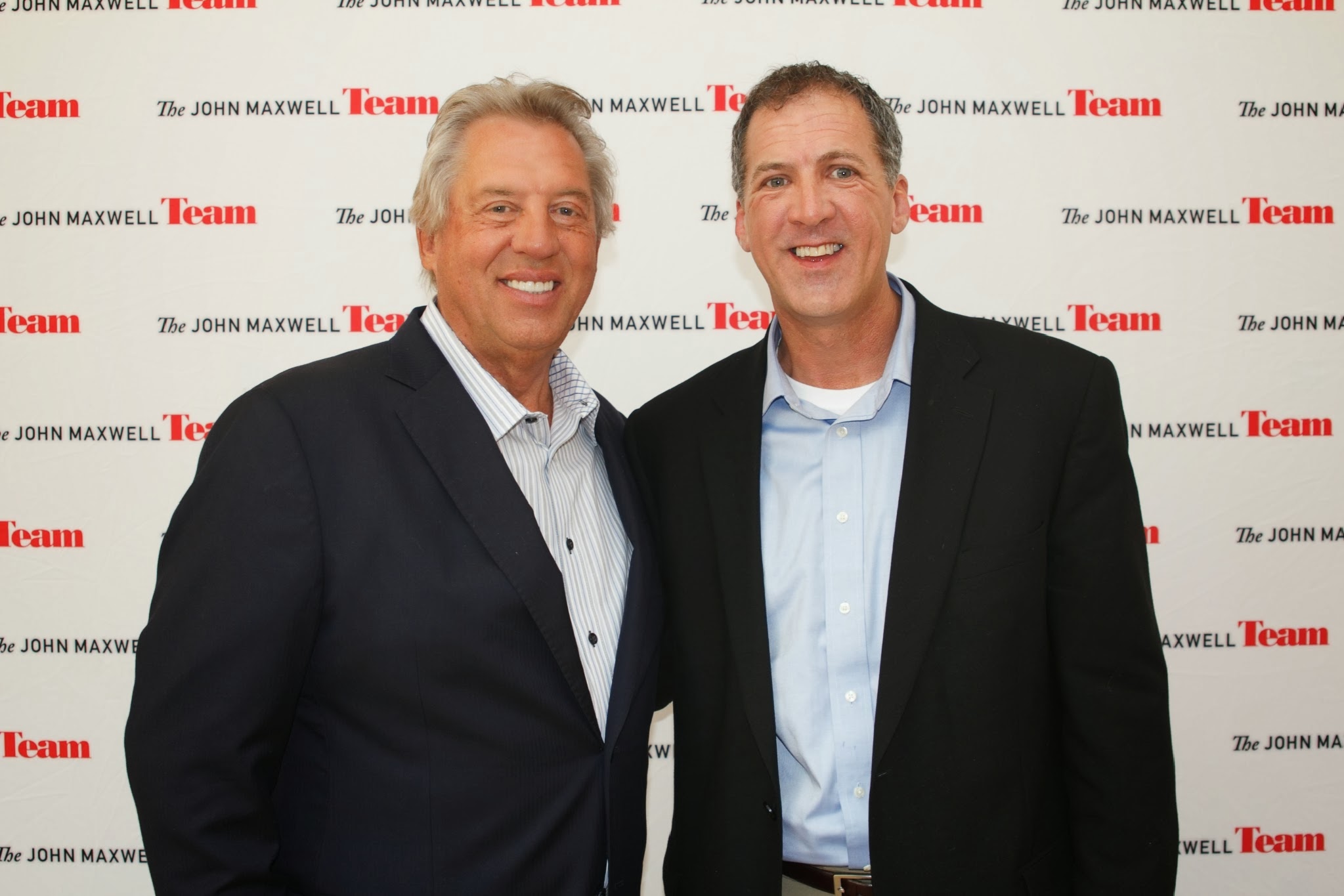
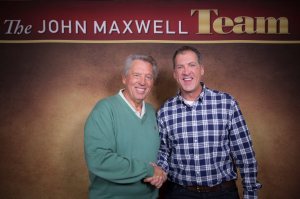
I recently came across this post and felt it reflected how I feel and approach teaching leadership and more importantly the lessons I base my leadership foundation on.Denis and John

Here are 25 key lessons that capture and distill what I think are some of the most important insights from John Maxwell:

1. Leadership is influence.

Maxwell defines leadership as influence. It’s simple, effective, and precise. In The 21 Irrefutable Laws of Leadership, Maxwell says, “True leadership cannot be awarded, appointed, or assigned. It comes only from influence, and that can’t be mandated. It must be earned. The only thing a title can buy is a little time – either to increase your level of influence with others or to erase it.”

2. Leadership isn’t a position, it’s a process.

Leadership starts right where you are, from the inside out. Maxwell says, “Most people who want to get ahead do it backward. They think, ‘I’ll get a bigger job, then I’ll learn how to be a leader.’ But showing leadership skill is how you get the bigger job in the first place. Leadership isn’t a position, it’s a process.”

3. Just do it.

Forget motivation and just do it. Maxwell says, “The whole idea of motivation is a trap. Forget motivation. Just do it. Exercise, lose weight, test your blood sugar, or whatever. Do it without motivation. And then, guess what? After you start doing the thing, that’s when the motivation comes and makes it easy for you to keep on doing it.”

4. Your attitude towards life is still under construction.

According to Maxwell, your attitude towards life is constantly being shaped by the following factors: personality (who are you), environment (what’s around you), word expression (what you hear), adult acceptance/affirmation (what you feel), self-image(how you see yourself), exposure to new experiences, association with peers (who influences you), physical appearance (how you look to others), and marriage, family, and job (your security and status.) Maxwell believes that your environment shapes you more than your personality or other inherited traits, and that your outward actions are a direct reflection of your self-image (we tend to act consistently with how we see ourselves.) In Attitude 101, Maxwell says, “Whether you are eleven, forty-two, or sixty-five, your attitude toward life is still under construction. It’s never too late for a person to change his attitude.”

5. Use principles to guide you.

Drive from durable principles instead of a bunch of rules and policies. According to Maxwell, “policies are many, principles are few, policies will change, principles never do.”

6. Leadership is a collection of skills.

Leadership is something you can learn and improve at. Maxwell says, “Although it is true that some people are born with greater natural gifts than others, the ability to lead is really a collection of skills, nearly all of which can be learned and improved.”

7. Build trust through competence, connection, and character.

You won’t follow somebody you don’t trust. As a leader, you have to build trust. Maxwell says, “There are three qualities a leader must exemplify to build trust: competence, connection, and character.”

8. Success is a journey, not a destination.

Don’t think of success as a place. Think of it as a path. Success is a journey you can enjoy a day at a time. Take the right people with you on your success journey. In Your Road Map for Success, Maxwell identifies 10 things to look for when figuring out who to invest in or who to bring with you: 1) make things happen, 2) see and seize opportunities, 3) influence others, 4) add value, 5) attract other leaders, 6) equip others, 7) provide inspiring ideas, 8.) possess uncommonly positive attitudes, 9) live up to their commitments, and 10) have loyalty.

9. Success is a daily thing.

You can be successful one day or one decision at a time. Maxwell says, “If you can handle today correctly, tomorrow will take care of itself.”

10. Success is a decision at a time.

Maxwell says, “You don’t become a success when you get your diploma. You became a success when you decided to go to college. When you get your diploma you get the rewards of success.”

11. Seven Steps for success

In Success One Day at a Time, Maxwell shares 7 steps for success: 1) make a commitment to grow daily, 2) value the process more than events, 3) don’t wait for inspiration, 4) be willing to sacrifice pleasure for opportunity, 5) dream big, 6) plan your priorities, and 7) give up to go up.

12. Look for the landmarks of success.

The highest levels of success require a series of significant trade-offs. Maxwell identifies the following trade-offs that serve as landmarks: 1) achievement over affirmation, 2) excellence over acceptability, 3) personal growth over immediate pleasure, 4) future potential over financial gain, 5) a narrow focus over scattered interests, and significant over security.

13. Leadership is a visual thing.

The greatest leadership is by example. Maxwell says, “A leader is one who knows the way, goes the way, and shows the way.”

14. Everybody needs encouragement.

No matter who you are, you still need encouragement. Maxwell says, “Remember, man does not live on bread alone: sometimes he needs a little buttering up.”

15. Don’t take yourself too seriously.

In Your Roadmap for Success, Maxwell says we need to be able to laugh at ourselves, “… success depends more on your attitude than it does on how important you think you are. Life should be fun. Even if your job is important and should be taken seriously, that doesn’t mean you should take yourself seriously. You’ll go farther in life and have a better time doing it if you maintain a sense of humor, especially when it comes to yourself.”

16. Use failure as a springboard.

Unsuccessful people avoid taking any risks to try and avoid failure. Successful people turn failure into feedback. They don’t dwell on mistakes or the negative consequences of failures. Instead, they focus on the rewards of success and on learning from their mistakes. In Your Road Map for Success, Maxwell shares 10 ways to fail forward effectively:

1) appreciate the value of failure
2) don’t take failure personally
3) let failure redirect you
4) keep a sense of humorIMG_3601
5) ask why, not who
6.) make failure a learning experience
7) don’t let failure keep you down
8.) use failure as a gauge for growth
9) see the big picture
10) don’t give up.
17. Win with people.

Growing people is the key to growing your success. Maxwell says, “The growth and development of people is the highest calling of leadership” and “true success comes only when every generation continues to develop the next generation.” In 360 Degree Leader, Maxwell says, “Great leaders don’t use people so they can win. They lead people so they can all lead together. If that is truly your motivation, you can become the kind of person that people want to follow – whether they are beside, above, or below you in the organizational hierarchy.” Maxwell makes people development a priority. To avoid spreading himself too thin, he focuses 80 percent of his time developing only the top 20 percent of the people around him. Maxwell says, “your time is limited, and it makes more sense to help a few learn how to fly and reach their potential rather than show a big group only enough to whet their appetite.”

18. Let people fly with you for a while.

In Maxwell’s experience, the most effective way to mentor and ramp people up is the same way craftspeople have done for years: 1) do it, 2) I do it — and you watch, 3) you do it – and I watch, 4) you do it.

19. Ten principles for personal growth.

In Your Road Map for Success, Maxwell shares 10 principles for improving your personal growth: 1) choose a life of growth, 2) start growing today, 3) be teachable, 4) focus on self-development, not self-fulfillment, 5) never stay satisfied with current accomplishments, 6) be a continual learner, 7) concentrate on a few major themes, 8.) develop a plan for growth, 9) pay the price, 10) find a way to apply what you learn.

20. Don’t make happiness your measure of success.

Happiness is fleeting while success is a stable path. In Your Road Map for Success, Maxwell writes, “The continual search for happiness is a primary reason that so many people are miserable. If you make happiness your goal, you are almost certainly destined to fail. You will be on a continual roller coaster, changing from successful to unsuccessful with every mood change. Life is uncertain, and emotions aren’t stable. Happiness simply cannot be relied upon as a measure of success.”

21. Achievement over affirmation.

Focus on achievement rather than worry about fitting in. Maxwell says, “Affirmation from others is fickle and fleeting. If you want to make an impact during your lifetime, you have to trade the praise you could receive from others for the things of value that you can accomplish. You can’t be ‘one of the boys’ and follow your destiny at the same time.”

22. Four kinds of people when it comes to relationships.

In Success 101, Maxwell says there are 4 kinds of people when it comes to relationships: 1) some people add something to life (we enjoy them), 2) some people subtract something from life (we tolerate them), 3) some people multiply something in life (we value them), 4) some people divide something in life (we avoid them.)

23. Lead yourself exceptionally well.

Leadership starts from the inside out. Lead yourself first. In Success 101, Maxwell identifies 7 areas that successful people must self-manage: 1) you emotions, 2) your time, 3) your priorities, 4) your energy, 5) your thinking, 6) your words, and 7) your personal life.

24. Treat people like a “10.”

Who gets your better effort? … a leader who treats you as a “2” or a leader who treats you as a “10”? Maxwell says that in his experience, people usually rise to the leader’s expectations – if they like the leader. Treat people like a 10 if you want their best. Maxwell says one way to do this is to focus on a skill or strength that somebody has that is a “10.” If you can’t find a “10” in terms of skill, then rather than write somebody off, look to a non-skill area where the person can grow into a “10”, independent of skill, such as attitude, desire, discipline, and perseverance.
11043450_10206140298331595_4168106119090063305_o

In the 360 Degree Leader, Maxwell says there are two ways to get ahead: production and politics. Maxwell says avoid office politics and instead focus on production. Maxwell says that people who rely on production: depend on how they grow, focus on what they do, become better than they appear, provide substance, do what’s necessary, work to control their own destiny, grow into the next level, base decisions on principles. On the other hand, people who rely on politics: depend on who they know, focus on what they say, appear better than they are, take shortcuts, do what’s popular, let others control their destiny, hope to be given the next level, base decisions on opinions. Maxwell shares 6 ways to avoid politics: 1) avoid gossip, 2) stay away from petty arguments, 3) stand up for what’s right, not just for what’s popular, 4) look at all sides of the issue, 5) don’t protect your turf, and 6) say what you mean, and mean what you say.
 

THE RIGHT ROUTINE RESULTS IN SUCCESS

morning-routineAs I grow in my leadership, I realize the importance of creating a daily routine that will  drive my thoughts and actions for that day.   What I do at the beginning of each day and throughout the day are very important to the others days, weeks and even months.  What we think and do now, has a direct outcome on the future.


I thought I would share what I do to ensure my heart and attitude are right for the day’s activities and the interactions with others.

Here are 6 things I do every day to ensure I am fully prepared to succeed in whatever is planned or whatever unplanned events may come my way.

  1. Up By 4:30 AM – I get up early. I love being at the office and watch the sun come up.  It seems to inspire me.  Getting up at that time also allows me to complete the next 5 steps.  In addition, scientific evidence has shown getting up early will:  help your performance, make you more reliable, be more alert, stress less and loose more weight (not that you ladies need to).
  2. GET MY HEART RIGHT – I’ve come to know the great importance of beginning my day in prayer and reading the word of God.  This prepares  my heart and soul for the day activities.  I spend 30-45 minutes doing this.  It ensures I have the right mindset and attitude to interact and work with people, solve problems and to fully engage myself in the conversations and activities throughout the day.  I spend a big part of my day providing coaching and at times guidance to fellow employees.  My heart must be right, to give the right advice or coaching.
  3. PRIORITIZE – I have a list.  Every morning I review it, add to it, subtract from it, move things up or down, write notes out to the side of some, put ? marks on others.  I identify what is essential for that day. I prioritize for the days activities.  However, I also spend a little effort and time to determine what items are critical for tomorrow’s activities and the weeks to come.  I found the tI must not only plan for today but also the future.  I also know the tI must realize that some things can b put off for another day.  YOU CANNOT TACKLE EVERYTHING…….trying to will drive you mad!! Check your list multiple times a day and be flexible to re-prioritize as needed.
  4.  PERSONAL GROWTH – If you don’t invest in yourself, then you can’t invest tin others. Part of my morning is spent reading listening or watching a video to ensure my grow as a leader and professional. I use to hate to read.  Now, I just dislike it.  But I also realized that reading stimulates my thoughts, ideas and affects my actions (consider what you read). It also stirs up a sense of adventure, encourages me and  grows my vocabulary.  Find what motivates you.  But remember, this is your time, use it wisely.
  5. BUILDING RELATIONSHIPS – This is different from networking. Networking is positioning yourself within a professional setting through acquaintances .  Networking is not relational, but can produce relationships. Relationships are investing in others. It is the glue that holds people together.  Relationships allow  you to build trust through adding value and eventually influencing. Spend your morning and time throughout the day to send that email or call that person and see how they are doing and what you might be able to help with.
  6.  FOCUS, FOCUS, FOCUS –  Distraction can be is disastrous!!  Be sure and know when social media is appropriate and when your focus needs to be completing the task at hand.  It seems these days that every free mental moment is used to accept friend request, check that snapchat picture or grow our linked network.  Hey….that stuff will be there later.  However, if you don’t perform it might mean you don’t have a job.  I am very selective when accepting calls or emails.  Every hour I th-45will check my voice and email mails and respond to those that require my attention. Social media and conversations are reserved for breaks and lunches.  Now understand, situations change and there are always exceptions to the rule.

When we get the right routine, results follow.  Unfortunately when we have the wrong routine or no routine at all, results can suffer.  Invest the time and effort to create a routine that ensures your success.  Stick with it.  Make adjustments when necessary.  However,
have a routine and you will benefit from it.

5 STAGES OF LEADERSHIP

5 STAGES TO BECOMING A LEADERWithout influence there is no leadership.  John Maxwell states, “leadership develops daily, not in a day” Leadership is a process. In the 21 Irrefutable Laws of Leadership, John Maxwell states, “Champions don’t become champions in the ring, they are merely recognized there.” People who aspire to become great leaders, must relate to the boxer. They must progress through the stages with hard work and determination for success. One must however, realize the stages within the process and what each entails. After all, each stage within the process, ultimately allows the leader to influence.

Through my development of leadership training material, speaking on the subject and coaching business professionals, I have concluded that leadership is achieved through a simple five (5) stage process that culminates with influence.

The five stages to leadership are:

STAGE 1 – CONNECTING with people

STAGE 2 – Building a sincere RELATIONSHIP

STAGE 3 – Creating TRUST

STAGE 4 – Adding VALUE

STAGE 5 – Ultimately INFLUENCING their decision process

Let’s take a look at each stage within the leadership process;

 STAGE 1 – CONNECTING

Connecting with people is the first stage in becoming a leader.  There is no influence without first connecting.  In the book, Everyone Communicates, Few Connect, John Maxwell states, “Connecting is the ability to identify with people and relate to them in a way that increases your influence with them”.   One must look for opportunities to come along side employees and meet them where they are.  An intentional effort must be made getting to know employees.  Spend as much times as possible getting to know them, their families, their hobbies, and eventually what they like and don’t like or what works and doesn’t work.  To efficiently connect with people, do the following:

  • Don’t take anyone for granted – Value everyone and every task they perform, regardless of their position.
  • Convince them that you want to make a difference – If you don’t believe in it, how will they?
  • Follow up and follow on – I say it all the time, “Action is Traction”. Look for small and quick things that you can address. Start getting their buy-in by winning in the little things.
  • Look for common ground – I look for things in common. For me it’s baseball, NASCAR.  Listen in your conversations and key in on things that you have in common.
  • Be honest and transparent – Honesty and humility go a long way in connecting with people. Leave the arrogance at home.
  • Once you feel a connection, move on – You must complete the connection  before moving on to any other stage. Without it, there is no other stage.

When you connect with employees, you position yourself to make the most of your efforts, thus creating an environment for performance.  Connecting creates the foundation for moving to the next step, building a sincere relationship.

 STAGE 2REALATIONSHIPS

In his book, My Personal Best, author John Wooden writes; “There is a choice you have to make in everything you do, so keep in mind that in the end, the choice you make makes you”.  Nowhere is this more evident and true than in the relationships you build.  Building a sincere relationship is the second stage of the leadership process.  Relationships are sacred. When we connect with people, we must maintain that connection by building a relationship. That simply means spending time with employees. Helping them solve problems, standing with them in the rain, snow and heat. Being there to hear their struggles and concerns. Relationships are the key to creating trust. In the relationship stage, employees begin to trust you. In the book, Beyond Talent, Maxwell outlines mutual enjoyment, respect, shared experiences, trust and reciprocity as the five signs of a solid relationship.   Steven Covey said, “The relationship neither makes the issue any less real or important, nor eliminates the differences in perspective.  But it does eliminate the differences in personality and position and creates a positive cooperative energy focused on thoroughly understanding the issues and resolving them in a mutually beneficial way.”  Building relationships creates trust.

STAGE 3TRUST

Steven Covey said, “Trust is the glue of life.  It’s the most essential ingredient in effective communication.  It’s the foundational principle that upholds all relationships”.  Trust is crucial in the leadership process. In fact, trust is the foundation of leadership. Trust can be described simply by comparing it to pocket change.  Every good decision puts change in your pocket.  Every poor decision takes change out of your pocket. The key is to increase your pocket change, rather than always paying it out. Sure we all make mistakes.  And each mistake cost us change from our pocket. However, employees are tolerant of mistake as long as we are transparent, quick to humility and strive to regain their confidence.

John Maxwell shares three qualities a leader must exhibit to gain trust; competence, connection and character. Violate anyone of these three qualities and you will loose the trust of those who follow. Trust is doing what’s right because it’s right.  I don’t think anyone can remain a leader if he or she continues to make poor decisions and break the trust of employees. In fact, a leader can’t be a leader if there is no trust, because trust leads to influence. If people don’t trust you, you can’t have influence. Without influence, you can’t lead.

STAGE 4VALUE

Adding value is the work of the three stages above. If you have properly connected with your employees and built a sincere firm relationship through trust, then I believe you have the tools and knowledge to add value to them. Zig Ziglar said. “I had to live in the desert before I could understand the full value of grass in a green ditch.” Value is achieved by understanding what is important to those you influence or desire to influence.

Let’s make sure we are all on the same page. I am not talking about the monetary value of something, but rather the value gained through effort. You add value through respect. Respect is gained not in the normal things, but rather the difficult right things. One must be viewed as competent and credible before respect is given. John Maxwell said, “While poor leaders demand respect, competent leaders command respect”. As leaders become more and more credible their command for respect become more and more evident. Value takes more than just “telling” , but rather one must demonstrate commitment and consistency in the activities and actions relating to safety.

Proactive value should be the basis for all activities and goals and objectives. Proactive professionals are smartly driven individuals looking to read reality and know what’s needed. Professionals who look to manipulate begin a series of distrust which tends to cause relationships to dissolve and the loss of leadership. Albert Einstein said ,”Strive not to be a success, but rather to be of value”. If the organization see’s the value in the direction, activities and actions, then the door to influence is open.

 STAGE 5INFLUENCE

Ultimately, the goal is to influence all levels with in the organization in the direction that provides the most successful outcome. Influence is what we need to lead. Without influence no one can achieve anything.  Leaders must learn to influence without authority. If you want to lead, you must become a person of influence.

Leadership is achieved by completing these 5 stages.  But remember, leadership is influence………….

If you can’t learn how to influence, you can’t be a leader.


10 ACTIONS TO INCREASE YOUR INFLUENCE

cropped-influenceyoucanmakeadifference.jpgWant to increase your influence?  I think the 10 actions and concepts below will help you.  As you have probably heard me say or read John Maxwell’s writings, he defines leadership as Influence,Nothing More, Nothing Less. I work daily to increase my influence.  However, I’ve come to realize that influence takes time.  It requires consistency and tenacity.   Try these actions and concepts. Practice them often and  stay you will increase your influence.

Read it…….it’s less than a 1000 words!

  • WANT TO INFLUENCE? FIRST THINGS FIRST, ENCOURAGE – Start every conversation with something positive about the person or group you are addressing.  I’ve learned this over the years.  People are motivated by encouraging words.
  • INFLUENCE BY UNDERSTANDING  – Although you have a responsibility for self-leadership, leadership is about others. When I think about what needs to happen or take place, I think about how my actions, my conversations and my vision will affect others. I’ve realized that my performance is a direct reflection of my leadership.
  • INFLUENTIAL LEADERS EXPERIENCE THE WORLD OF THOSE THEY LEAD – They look at the bigger picture, they understand the trials and troubles they go through. Good leaders become someone who listens to their people, not to reply, but to understand. Get in tune and understand the people you lead and you will increase your influence.
  • INFLUENTIAL LEADERS REALIZE  EVERYONE COMES IN DIFFERENT SHAPES AND SIZES – They realize that Good Leaders Ask Great Questions (read this book from John Maxwell). The right questions will uncover a person’s interest and what motivates them. I think it is important to connect by finding common ground and nurturing relationships. This process will allow the leader to develop relative questions that will reveal their desires and interest.
  • INFLUENTIAL LEADERS HELP OTHERS – I think we get so consumed with our own desires and agendas that tunnel vision occurs and we don’t see the needs of others.  I have learned when we are first to offer assistance and help, we begin connecting in such a way that our relationship allows us to influence.  Zig Ziglar said, “You can have everything in life you want if you will just help enough other people get what they want”.  Look at those you lead, take action and watch your influence grow.
  • INFLUENTIAL LEADERS ADD VALUE –  People who are in it for themselves will never achieve anything great. Those who look for ways to add value to others will influence.  Add value by finding out what is important to those you lead. Value will look different in every situation.  A good leader will ask great questions to identify what value looks like.  Treat value independently to the person.
  • INFLUENCE WITH STORIES AND EXAMPLES – As a speaker, I’ve learned the importance of sharing good relevant stories. As a leader and professional, I’ve recognized the importance and effectiveness of sharing good stories with those I influence. People want to see the human side of leaders. I believe stories create a sense of belonging and connect us through life’s similarities.  Leaders who learn to master the art of good storytelling are the one’s who attract followers.Showing-direction-influence
  • INFLUENCE BY GIVING OF YOURSELF WITHOUT ANY STRINGS ATTACHED –  Give without any strings attached. I believe it is very important to be in “in tune” with those you lead or have potential influence with. Christopher Reeve said “Success is finding satisfaction in giving a little more than you take”.  When we give without any strings attached, we will benefit professionally and personally and professionally.
  • PEOPLE OF INFLUENCE KNOW THE IMPORTANCE OF A NAME – What is so important about a person’s name?  It is how we identify them.  Sure there are many people who have the same name, but what happens when you call a random name in a crowd?  People respond.   Learn the names of those you meet and associate with.   Few sounds are as sweet to a person as hearing their spoken name, few sounds are as irritating when you refer to someone by the wrong name.  Remembering names, shows you value them.
  • INFLUENTIAL LEADERS PUBLICLY ACKNOWLEDGE STRENGTHS – I think one of the best ways to gain influence is to acknowledge a person’s strengths.   Areas within their personality or employment that seems to tie them well to the organization. When people are recognized for what they do well, they gain an enthusiasim to do more and do it better.  In fact, they will want to “Exceed Expectations”, not just meet them.  When people exceed expectations, everyone wins!  Recognize what people do well in front of others and you will be surprised by the growth of influence.

We all have influence, big andInfluence-2 small.   We all have things we are gifted or good at. Things we leverage by adding value to others.  Whether it is our attitude, problem solving skills or simply just our ability to laugh, we should be sharing our knowledge, experience and influence.  Employees respond to influence.   We should work hard to increase our influence by adding real value everyday. Do this and you will increase your leadership. You’ve heard it before, Leadership is influence, nothing more, nothing less.  Go have influence on others!!

INFLUENTIAL LEADERS ARE EFFECTIVE COMMUNICATORS, 10 Principals to Becoming a Better Communicator

 Influential

GREAT LEADERS ARE GREAT COMMUNCIATORS.! I can’t think of any influential leader that is not a good communicator. Think about it. Everyone you respect as a leader can communicate effectively in every situation, good or bad, stressful or easy, big or small. As leaders, the way we approach and talk to people has a direct impact on the outcome. I wanted to write this piece because of my past (and sometimes present) way of approaching people and interacting with them. This is an area I have been working very hard on.

When I think about influence, I think about the initial contact, interaction and then the forthcoming communication1communication. Throughout my career, I have come to realize that influential people and those who have great interactive skills are able to recognize the situation and adjust their approach quickly to enable the most effective outcome.

To become an influential leader, you must learn to anticipate the reaction of people and use the correct tone and inflection to motivate the employee to react and respond appropriately. Remember, leadership is influence, nothing more, nothing less. So we must develop a communication method that allows for influence.

We all communicate, right? But what is communication? Ask anyone on the street and they will likely include the word, “talking”. Well, communicating definitely includes talking. But, is it simply talking? I define talking as a prearranged group of vowels and consonants expelled with an abundance of hot air to address a particular thought or answer. So I concede that communication does include talking certainly; however, communication must go beyond talking and into connecting.

In John Maxwell’s book, Everyone Communicates, But Few Connect, he discusses communication going way beyond words as revealed through a study conducted by UCLA Professor, Albert Mehrabian. Professor Mehrabian discovered that face-to-face communications could be broken down into three components: words, tone of voice, and body language. What may come as a surprise is that in some situations, what people see us do and the tone we use can far outweigh any words we say whth-33ile trying to communicate. If we can maximize the use of these three components in a conversation then we can become very effective communicators resulting in a positive interaction and greater ability to influence.

How do you become a better communicator and ultimately an Influential Leader? Through my own study and desire to improve, I have come up with 10 principles you can use to improve. Follow these and have greater influence.

  1. Know Who You are Talking To or Dealing With – Leaders who communicate effectively realize they are responsible for their reactions and are very careful to create a non-threatening atmosphere. They always seem to be in control of a conversation, but not over-powering. They don’t worry about sounding important, having power or being the “expert.” Instead, they think about what needs to be addressed and ultimately what needs to be said. They are thoughtful about how they can deliver this message so that people will be able to hear it.  Leaders communicate expectations and tell people what’s important for them to know, even if it’s negative.
  2. Evaluate Body Language – Influential Leaders constantly track people’s reactions to their message. You must recognize the changes in body language including facial expressions, body stances, etc. Is the person facing you, looking down or rolling his/her eyes? Body language is feedback. Many times, this is the only feedback you will get. Learn to read body language and you can tailor your message to adjust the way we interact as needed.
  3. Be Honest and Factual – People who are influential leaders are honest in their communication. They don’t stretch or exaggerate the circumstances. They certainly don’t lie to make their point or look good to others. They are transparent people that admit if they don’t have all the facts or can’t share information.   They don’t use the politician method of creating circular answers that never address the issue. Influential leaders understand that lies and half-truths create dissention, distrust and anxiety.
  4. Be Who You Are Regardless of the Situation- Don’t be someone you’re not! People will find out the real you. Position or prestige doesn’t change who you are. Look at professional athletes. They become rich and famous, but they are who they are regardless of the amount of money they have or how many highlight reels they make. There’s a reason Mark Zuckerberg presented Facebook to investors in a hoodie and jeans. This is who he is and he knows the value of staying true to who he is. People will be open and allow you to influence if they believe you are who you and nothing more.
  5. Speak With Authority and Conviction – If you believe it, then say it! Don’t use words that you can’t say or don’t know the meaning of. President George W. Bush was the master of making up words. This often watered down or moved the focus from his points. However, he often spoke with authority and conviction giving credibility to his thoughts and desires. Influential Leaders speak directly to and with authority in the things they are passionate about and are clear on their desires and intended outcomes.
  6. Speak to Groups as Individuals – Leaders rarely have the luxury of speaking to one person at a time. Whether they’re addressing a toolbox topic or conducting a keynote with 5,000 people, influential leaders know how to work the crowd or group and make every single person feel as if he or she is being spoken to directly.
  7. Use Your Ears for More Than Hanging Glasses – Influential leaders realize that listening is far more than hearing. They understand that we listen not to reply, but to understand. When someone else is speaking, great communicators aren’t thinking ahead and planning what they’ll say next. Instead, they’re actively listening, fully focused on understanding the other person’s perspective. Leaders must listen to employees and seek to understand their concerns, hesitations and struggles.
  8. Be Humble – Influential leaders are not afraid to use phrases such as; “It’s My Fault,” “I Was Wrong,” and “I’m Sorry”. Humble leaders admit mistakes right away and are not driven by drama or false humility.
  9. Ask for Feedback – Influential leaders are always looking for ways to improve their communication and interaction. They are not afraid to ask how they can become better and more effective. They realize we see and hear our actions and words based on our intent, while others see and hear through our actual actions and words. If you are good, asking for feedback will make you better. If you are bad, it will improve you.   Either way, you will become better at communicating and interacting.
  10. Be Proactive, Not Reactive – Influential Leaders are proactive in responding to situations and rumors by being open and transparent in their communications. They are very clear in their directions and expectations and are always providing necessary feedback to ensure people don’t waste their time on things that don’t matter.

InfluenceAs I stated at the beginning, “Influential Leaders must become effective communicators. You will stand out and people will be drawn to you. Is it because of your effective influence or your destructive influence? When you implement these 10 principles, you become a better communicator with greater influence.