ACHIEVING CHANGE IN AN UNCHANGEABLE ENVIRONMENT

I recently began a new job with a large organization. The organization is somewhat unique to me because it consists of two legacy organizations each made up of multiple companies. Each organization operated independently until recently when ownership decided to merge the two legacy organizations into a single corporation with shared visions and goals.

“Change is achievable in any environment, as long as all layers are iniated in the change process.” – Denis Baker

I was hired to help create a transformational change where safety and health are Fotosearch_k27534040integrated into the entire operational culture. I believe this is the only practical method for achieving safety and health goals and ultimately an incident-free culture. Safety and health should never be “first” or a “priority,” but rather a core value integrated into the culture of the organization. You see, priorities change, values do not and first is not always. I often use a pie analogy to visualize this. The pie is divided into equal pieces, with safety and health having an equal slice of the total pie. No more, no less, but equal.

Whether your profession is safety or finance, the successful process of change is the same. Here are 10 principles to follow when initiating change. Execute these, and your efforts will be made fruitful.

1. Have compassion and understanding. Regardless of circumstances, change is scary, and you represent a terrifying unknown. Every location I visit, after we complete the professional introductions and small talk, I am met immediate resistance. And most will try and distance themselves. When I begin touring, asking questions and making suggestions, encounter looks of concern or frustration and often hear, “but that is not the way we do it,” or we’ve always done it this way.” To help soften my perceived impact, I often encourage their suggestions or solutions. This creates a great team-centered environment that allows them to consider any of my initiatives. Probably, the most important thing I’ve come to realize, is their reactions aren’t personal; they are just responding to an uninvited change.

2. Reach out and connect with those affected by the change. Success in anything cannot be achieved without effective relationships. Before a relationship can begin, one must first connect with the person or group. Do this by identifying common ground. Look for small wins that build respect and credibility.  In the beginning, change can be frustrating for both sides. It will be tempting to simply brush off questions or concerns, because you may feel it is easier to just do it. And it is. However, I BEG YOU to RESIST that urge! No doubt we want quick results, but you’re better off starting slow and finding common ground. Find opportunities for one-on-one interactions. For change to be successful, connecting with those affected requires consistent, realistic, heartfelt conversation.

3. Influence the influencers. Influence those who have influence, without neglecting the others. Pay attention to group dynamics and identify the influencers. Identify who they are, and get to know them immediately. Learn what they value and be transparent in addressing their needs, concerns or wants. Just remember, you can’t do or control what you don’t control.

4. Expect resistance and don’t ignore it. Resistance is always present for any change, especially culture change. Don’t think it will go away on its own, it won’t. In fact, if left unattended, it will multiply and infiltrate the entire organization. Once this occurs, your job just got tougher. Meet with the discontent. Put your pride aside and listen. Address each issue as it comes up, but don’t make any promises or commitments you can achieve. If that happens, you just lost all the trust and respect you’ve been working to achieve. Gain buy-in by understanding the reasons getting buy-in for your vision and goals for change. Realize that most of the resistors are the influencers.

5. Communicate your values. In the safety profession, it’tempting to withdraw when you encounter conflict, but you have to do the opposite. You’ve got to overcommunicate. Look for ways to demonstrate your values as you explain your vision. You want to reassure people that your principles are positive and show where your values align with theirs. The key is to be steady, positive and consistent.

6. Learn from other leaders. How do others achieve change? Read, ask and network, looking for ways and ideas that might work in your situation. I often tell people to go with their gut. Meaning, if your intuition is saying yes or no, then follow that “gut feeling” and move forward. As we say in the safety profession, “steal shamelessly.” Great leaders learn to steal the best ideas. Remember, their approach or tactics are vetted and proven.

7. Go forward boldly. Don’t be afraid to make mistakes. (Just be sure to fix them faster than you make them!) Stop and assess yourself, your process and your progress often, and course-correct as needed. Mistakes are inevitable. Keep it moving.

8. Prioritize and act. Identify the one or two areas where you will receive the greatest benefit and make that your priority effort. However, always evaluate your progress, the level of reception, the level of effectiveness and be ready to make changes as needed.Remember you are the change agent, you must be willing to change.

9. Create wins for the organization. Never underestimate the power of early victories. They give people confidence to keep pushing forward, even though turning the ship is hard. Achieving an early win builds momentum. People trust leaders with a proven track record. They will accept changes from people who have led them to victory before. Remember, it is easier to steer a moving train than stop it.

10. Identify and equip other leaders. If you want to sustain change and start building momentum, you must start developing and equipping the leaders. This is something many organizations fail at. We take the best worker and make them the leader. Great principle, but horrible execution. We tend to neglect the coaching and training needed to make that person successful. Look for those who rise to the top and pour into them your coaching and mentoring efforts to see them become the best leaders possible.

When I am looking for a job, I tend to identify companies where change is needed. In Fotosearch_k21722018fact, I have been a crucial part of at least six organizations where a cultural change was required. I approach each opportunity by implementing these 10 principles. Execute these 10 principles and watch change take place.

Influential Leaders Never Use These Phrases

Believe me when I tell you that I can offend even when it is meant for praise. We’ve all said things that people interpreted much differently than we thought they would. These seemingly benign comments lead to the awful feeling that only comes when you’ve planted your foot firmly into your mouth.I recently read an article by Travis Bradbury, author of Emotional Intelligence 2.0. It offered insight into what to say in a conversation. I thought I would share some highlights with you. 


1. “You look tired” – Tired people are incredibly unappealing — they have droopy eyes and messy hair, they have trouble concentrating, and they’re as grouchy as they come. Telling someone he looks tired implies all of the above and then some. Instead say: “Is everything okay?”

2. “Wow, you’ve lost a ton of weight!” – Once again, a well-meaning comment—in this case a compliment—creates the impression that you’re being critical. Telling someone that she has lost a lot of weight suggests that she used to look fat or unattractive. Instead say: “You look fantastic.”

3. “You were too good for her anyway” – When someone severs ties with a relationship of any type, personal or professional, this comment implies he has bad taste and made a poor choice in the first place. Instead say: “Her loss!”

4. “You always . . .” or “You never . . .” – No one always or never does anything. People don’t see themselves as one-dimensional, so you shouldn’t attempt to define them as such. These phrases make people defensive and closed off to your message, which is a really bad thing because you likely use these phrases when you have something important to discuss. Instead say: Simply point out what the other person did that’s a problem for you. Stick to the facts. If the frequency of the behavior is an issue, you can always say, “It seems like you do this often.” or “You do this often enough for me to notice.”

5. “You look great for your age”– Using “for your” as a qualifier always comes across as condescending and rude. No one wants to be smart for an athlete or in good shape relative to other people who are also knocking on death’s door. People simply want to be smart and fit. Instead say: “You look great.”

6. “As I said before . . .” –  We all forget things from time to time. This phrase makes it sound as if you’re insulted at having to repeat yourself, which is hard on the recipient (someone who is genuinely interested in hearing your perspective). Instead say: When you say it again, see what you can do to convey the message in a clearer and more interesting manner. This way they’ll remember what you said.

7. “Good luck”– This is a subtle one. It certainly isn’t the end of the world if you wish someone good luck, but you can do better because this phrase implies that they need luck to succeed. Instead say: “I know you have what it takes.”

8. “It’s up to you” or “Whatever you want” – While you may be indifferent to the question, your opinion is important to the person asking (or else he wouldn’t have asked you in the first place). Instead say: “I don’t have a strong opinion either way, but a couple things to consider are . . .”

9. “Well at least I’ve never…” – This phrase is an aggressive way to shift attention away from your mistake by pointing out an old, likely irrelevant mistake the other person made (and one you should have forgiven her for by now). Instead say: “I’m sorry.”

In everyday conversation, it’s the little things that make all the difference. Try these suggestions out, and you’ll be amazed at the positive response you get.

5 Ways to Defeat Complacency


The phrase,” it is what it is” becomes the motto for many people who allow complacency complacency-2to embed there lives and way of thinking. In fact, that phrase indicates complacency has overtaken their ability to transform their results.
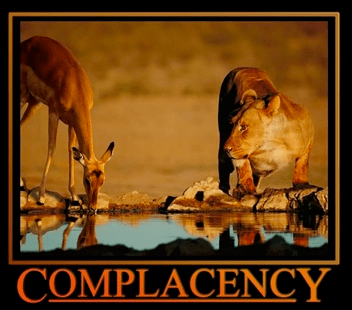
Complacency is like a deadly virus dormant in your system. It is lurking to kill your goals, dreams, and success.  It has the power to rob you blind of new experience, positive change, and personal growth. The worst thing about complacency is the infected person is usually unaware that he or she is at risk.

Complacency occurs in all of us. It is present in our personal life and career. However, success is determined by your ability to effectively avoid or move away from complacency. 

To help you avoid or beat complacency, here are five ways to defeat or prevent complacency.

  1. Let Others Have Influence“Never mistake the power of influence.” – Jim Rohn. Leaders need to listen and be wise, vulnerable and courageous enough to allow others to have influence. I know what you are thinking, being vulnerable as a leader is a sign of weakness. That thinking is out of date. In fact, I believe vulnerability is a sign of strength, creativity, and openness. Vulnerability displaces complacency by ensuring we are allowing others to influence where and when we need it. Let’s face it, complacency embeds itself in the inability to think differently. Influence will enable us to consider options.
  2. Challenge the Status Quo“Today, our very survival depends on our ability to stay awake, to adjust to new ideas, to remain vigilant and to face the challenge of change.” – Martin Luther King Jr. Evaluate your goals often. As complacency sets in, our ability to think differently is minimized by our inability to process anything other than what we already know. Instead of seeing the opportunity to move forward, we wait to seek permission and find ourselves passed up by great opportunities. Lolly Daskell wrote, “Challenging the status quo takes an open mind, open heart and open will.” When we fail to challenge the status quo, we allow complacency to discourage our intentions and thus weaken our ability to contribute to success.
  3. Be Curious I have no special talents, I am just passionately curious.” – Albert Einstein. What we know is all we know. Without a curious mind and curious heart, we become stagnant in our thoughts and ideas. This allows complacency to become our comfort place. John Maxwell said, “When you lack curiosity, you breed indifference.”  Indifference leads to ruts and routines and creates a complacent spirit. Curiosity, on the other hand, promotes change and adventure and a desire to always improve.  Curiosity requires wisdom and courage, just like the explorers who first set off around the globe. When you are in exploration mode, you may be moving forward or side-to-side, but you never go backward. You put yourself in a position to create influence rather than falling into the traps of complacency.
  4. Kick Laziness in the RearWe often miss opportunity because it’s dressed in overalls and looks like work.” – Thomas Edison. Complacency results from our lack of desire to allow others to influence, challenging the status quo and the lack of curiosity. Why? Because we prefer to remain idle and do nothing. We are just lazy. We accept where we are and what we have accomplished, and there is no desire to do anything more. This creates a complacent environment where we accept our current position. We may have a desire have a desire to be better than we are, but we don’t do anything to move forward. Laziness puts our careers and relationships on hold. We become stagnant and accept our current performance as ideal. Success has no room for laziness. Become a person who desires perfection! In others words, “Just Do It.”
  5. Keep Hope Alive At All CostYou don’t have to see the whole staircase, just take the first step.” – Martin Luther King, Jr. Regardless of life or business situations, hope will always shine a positive light. Hope drives our desire for accomplishment. Hope is the belief that circumstances in the future will be better. It’s not a wish that things will get better, but an actual belief, even when there may be no evidence that to support it. Talent, skill, and ability gets you in the game, but the hope is the motivation that keeps you there. 

ComplacencyComplacency robs us of our success and achievements. It creates a way of thinking that blocks our ability to achieve the great things we desire. In fact, complacency sneaks up on us so fast that we don’t realize we’ve become complacent until someone points it out. 

Take a pro-active approach to preventing complacency by evaluating your current personal and business position and taking actions to defeat and even avert complacency. Consider these 5 ways to overcome complacency.


YOU GOT THE JOB! 7 Questions in 3 Categories to Ask Before You Accept Your Next Job Offer

I recently found myself in the job market. Even though it was somewhat of a shock, I embraced the idea of looking for a new job with excitement and lots of energy. I didn’t know what to expect or what the outcome may be, but I did know if giving the opportunity to meet face to face, I could influence the individual or group that my experience, knowledge, beliefs, and relationship approach to the profession would result in a positive outcome.

Well, there were more roadblocks than I anticipated along my journey (those will be coming in future blogs). However, I did land several offers, all within a week of each other.

Yes, I made it through the most difficult part of the job search. Well maybe not, deciding on what job to accept and if we were willing to move was pretty difficult in its self.

Throughout this process, I think one of the most difficult things to do was ask the right questions. Questions that provided relevant information to make the right choice. I believe I was so excited that I had an offer, much less multiple offers, that my thought was just to pick the one with the highest salary. Flawed thinking. I didn’t have a job, and I needed a job, so why did it matter. Money is the most essential thing in the position, right? Again, flawed thinking. You need to assess and evaluate all offers based on the role, the company, culture, future, benefits, and salary.

As I began looking at my options and trying to decide on what offer was right for me and my family, I realized I made a few critical interview and follow up mistakes. I didn’t get all the information I needed to make a decision based on sound facts and ultimately intuition.

After the decision was made, I read an article in HR Digest that listed practical questions to ask before you accept a job offer. Reading it, made sense and made me realize I fell short in my preparations for choosing the right offer. Now, I am not saying I picked the wrong position. In fact, I love my job, and it offers excellent challenges with exceptional growth opportunities. However, I believe I could have had a much better understanding of the role and those jobs competing with it.

From that article, I narrow down several questions I feel are relevant to the job search process and any impending offer.

When I began to evaluate each offer and looking back, I realized I should have focused on three main areas. I then identified seven questions in each area I feel are important in the interview process and job offer evaluation.

THE ROLE

Interviewing is a two-way street. The employer is offering you the job, and you are providing the talent.

When you ask questions, it shows interest in the company, gives you more information, and makes the conversation flow between you and the interviewer.

  1. How did this position come to be open?
  2. What does success look like in this role?
  3. What would my immediate priorities be?
  4. What are the most significant challenges people face when they start out in this position?
  5. Who will I report to directly?
  6. What are the expectations of this position over the first twelve months?
  7. How would you measure my success, if I were chosen for this role?

These questions would serve multiple purposes. It would give you a brief idea about how well suited you are for the role or the management style. It also lets the company know you’re motivated, passionate and ambitious in life. Moreover, they will open doors to discuss training, what projects you’ll be working on, and whom you would be working with.

SALARY & BENEFITS

  1. Is the pay negotiable?
  2. What is included as a part of your benefits package?
  3. What kind of opportunities exists for personal growth?
  4. What is the bonus structure? Will I be eligible this year? Is the percentage negotiable?
  5. What metrics or goals will I be evaluated against?
  6. How much paid vacation time will I get per year?
  7. Can I carry over the paid vacation time if I don’t utilize it?

These are specific questions you can ask when considering a job offer. It will make it much easier for you to negotiate on your contract before you join the team.

THE COMPANY CULTURE

  1. Where do you see the company in the next five years?
  2. Can you tell me about your new products or plans for growth?
  3. Would you mind giving me a tour of where this job would take place so I can get a feel of where I’d be working and who I would be working with?
  4. How is work-life balance in the company?
  5. What is the company culture here like?
  6. Would I be able to represent the company at industry events and conferences?
  7. Can I answer any final questions for you?

These are some very good questions to ask before you accept a job offer. It means you’re already thinking about the role you have been offered. You can also find out whether a company is right for you.

It will also help you make a better decision when you’re deciding between multiple offers so you can compare responses.

All You Are Is Full Of Hot Air! Moving From Words To Actions

c700x420Last Saturday morning I stepped out on my apartment balcony and saw several hot air balloons passing overhead. In fact, one was lifting off from the field across from the complex. As if I were a little kid, I excitedly called my wife over to show her the activity. She reluctantly came, and I began telling her how I was going to buy a hot air balloon, and I would take her up on a beautiful evening flight with a bottle of cabernet, and we would gaze into each other’s eyes into the evening sunset.

She looked at me and said, “All you are is a bunch of hot air.”

Hey wait a minute, I was romantic. Maybe that is why I was “full of hot air.” I am not well known for my romantic side.

Has anyone ever told you, you were full of hot air? If so, you are not alone. I think this post will help you understand why our words should not be hot air but rather backed up by the foundation of our actions.

It came to me that day while watching hot air balloons drifting overhead, that our words have a great impact on those we speak too. In fact, I realized that our words indicate our intended actions, but the follow-through is more important than any word in our vocabulary.

My intention is not to be a know it all, however, I think I know it all. If you don’t know it, then how will you solve it? Another, a fault I have is answering before I thought it out or committing before I realize what I committed to.  Had anyone ever say that to you? I hear it often because I talk too much. Regardless of the situation, I have the answer, and you will listen to it. My intention is not to be a know it all, however, I know it all. If you don’t know it, then how will you solve it? Another, a fault I have is answering before I thought it out or committing before I realize what I committed to.

I hear “you’re full of hot air, or that’s a lot of empty hot air coming from your mouth,” often. Probably because I talk way too much and have to get in everyone’s business to resolve everyone’s problems. Another, a fault I have is answering before I thought it out or committing before I realize what I committed to.Had anyone ever say that to you? I hear it often because I talk too much. Regardless of the situation, I have the answer, and you will listen to it. My intention is not to be a know it all, however, I know it all. If you don’t know it, then how will you solve it? Another, a fault I have is answering before I thought it out or committing before I realize what I committed to.

I know what you’re thinking, stop rambling and tell us what you are going to tell us.  Ok, Ok, got it. Here you go:

  1. Our actions build trust – Without trust, there is no influence, and without influence, there is no leadership. Deliver on what you say, and you begin to create trust.
  2. Our actions show personal responsibility – When, what we speak, is backed up by what we do, people begin to recognize the responsibility we have for achieving the desired outcome.
  3. Our actions create our reputation – You are known by your behaviors and the work you do. Make sure the things you say are truthful and backup by your actions.
  4. Actions show commitment – When we act, we validate our words, thoughts, and ideas.  We move from the verbal to the physical. Actions move our verbal commitment to the tangible result.

Our words are essential. They lay the foundation of our beliefs and our desires. However, they are merely words, actions prove our intentions and reflect our beliefs and desires.

Choose your words carefully, they must be backed up with actions.

stuffyoushouldknow-podcasts-wp-content-uploads-sites-16-2015-08-hotairballoons600x350

YOUR ATTITUDE HAS INFLUENCE ON THE BEHAVIORS OF OTHERS

Attitudes are contagious, is yours worth catching?

My wife and I recently spent a few days in New York City, enjoying the sights and sounds of Manhattan from our Madison Avenue hotel, and eating and spending time touring Central Park. One night I was sitting on the window sill, with the window open, 15 stories up (probably not what a safety professional should be doing), and couldn’t help but notice the amount of honking that goes on.  I initially became aware of it during our ride into the city from the airport. However, while I was sitting on the ledge, I realized something. When one person honks, it encourages others to do the same.  It became contagious.  One honk led to another and then another, and before long, it was a musical nightmare of various horns reverberating from building to building. All day, all night, people honked at all hours of the day or night. Recognizing this issue, generated a few rhetorical questions:

  1. Do people honk just because it is New York City and that’s what they do?
  2. What would happen if automakers remove the horn from vehicles?  Would the people of New York City be able to function?
  3. Is using a horn in NYC effective?  Didn’t seem so. Our driver was never affected by the horn.  He just did what he was going to do.  However, he did use his often.

Whether good or bad, your attitude will influence others.

A person’s behavior doesn’t dictate their attitude, but their attitude can dictate their behavior.

Attitude is contagious. Our attitude will determine our success or failure and the success or failure of others.  Attitude is more important than anything else, it is more important than money than any of your circumstances than your failures or your successes. It is more important than your appearance, your talent, or your skill. Your attitude will make or break you, and it will determine your ability to succeed in anything you do.

Winston Churchill said, ”Attitude is a little thing that makes a big difference”

Change-Negative-Attitude-to-PositiveThere is a direct correlation between attitude and behaviors. A person’s behavior is affected by their attitude.  Specifically, a person may do what is required when they must. However, remove the “must” situation, and they do what they want? Our attitude has an effect on others. Just as when one person honks in NYC, we all honk, our attitude will be contagious to many.

In our quest to positively influence a person’s attitude and ultimately their behavior, we must understand what impact our attitude has to our personal leadership. Once we understand this, we can have a positive influence on the attitudes of others.

Remember these as you consider your influence through your attitude:

  • Our attitude is ALWAYS in play – Simply, our attitude has an effect on everything and everyone.
  • Attitudes can lift a person or tear them down – Chuck Swindoll said, “Life is 10% of what happens to us and 90% of how we react.”
  • Attitudes are contagious (good or bad)
  • Bad attitudes catch on and spread faster – Honking in NYC…
  • Identifying bad attitudes can be difficult – This is true, especially in ourselves.  We always justify our bad attitudes.
  • Rotten attitudes will ruin everything – Absolutely right! How many times have you gone into a meeting or had a conversation with another person when your attitude was horrible? It never ends well.

667fe4c3-4012-4050-a33b-b92682d6db17_lg-1Casey Stengel,  a successful manager of the New York Yankees, had a conversation with a rookie manager named, Billy Martin.gal-taurus-billy-martin-jpg He told Billy this, “There will be 15 players who will run through a wall of fire for you, 5 who will hate you, and 5 who are undecided. When you make out the rooming list, always room your losers together. Never room a good guy with a loser. Those losers who stay together will blame the manager for everything, but it won’t spread if you keep them isolated.”

Who will you influence with your attitude today?

TRANSFORMATIONAL INFLUENCE, The 6 B’s to Transforming People Lives

I want to introduce you to something very different. A thought process that takes

661dfa8d-eeab-44f2-8e8f-cb7ecabb9f79our daily interactions with others and uses it to influence the desired conscience or sub-conscience outcome.
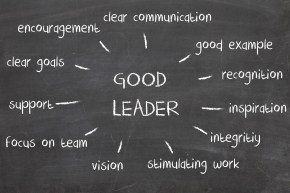
We all have an influence on others. In fact, many of us don’t even realize the influence we have. I am reminded of a recent note I received from a young man who was a part of our Wednesday Night, “Kids Club” at our church. He was in the 1st grade when I first met him, and we stayed in contact until after high school.

A while back I received a note thanking me for steering him into the fire service. As a safety professional and former volunteer firefighter, I would always talk to kids about my profession and the passion I had for helping others. Throughout the years, we had many informal conversations. However, I never really expected or thought he was seriously paying attention. I definitely didn’t think I was influencing him. I just thought it was cool that he was interested.

Today, that 1st grader is Deputy Chief with a Fire Service in Northern Arizona.

You’ve heard the term, “Transformational Leadership.” This is a process of leading by example. Transformational leaders tend to use rapport, inspiration, or empathy to engage followers. They are known to possess courage, confidence, and the willingness to make sacrifices for the greater good.

The term “Transformational Influence” takes the leadership style of Transformation Leadership to a deeper level. A person who has transformational influence, not only builds rapport but through their desire to influence, they utilize their relationship to influence a person in conversation and direction. Everything we do, say and how we interact with people has the potential to influence. Transformational Influence is based on your relationship through conversation with those you desire to influence.

The relationship we have determines the trust they have in us. Realizing the impact of this will dramatically affect your leadership effectiveness.

Never more than today has success depended so much on the willing collaboration of others, and your ability to influence them beyond the existing results, conditions, and circumstances of their lives. All of that brings us to the inevitable conclusion that many people completely miss. The most important skill to master in leadership is the art and skill of influence.

Think about it for a moment. The ability to influence others isn’t a “nice to have” in life today – it’s absolutely essential.

If you have a healthy relationship with a person, you have an opening within their mind and heart that will allow them to listen and consider your influence.

So the obvious question is, “How does a person achieve transformational influence”? Here are six (6) ideas to consider when you desire to have transformational influence:

  1. Be genuine in your relationship – Focus on the individual’s needs and or desires. You can only do that by being sincerely involved and curious.
  2. Be truthful – Don’t “beat around the bush.” If you have something to say, say it! However, consider when, where and how you say it. And always be encouraging. But rather be open and honest with encouraging advice or direction.
  3. Be intentional – Go out of your way to get to know a person’s likes and dislikes. Understand what motivates them and cater your conversations to encourage and guide.
  4. Be a servant – Serve them with your whole heart. Make it a priority to help them succeed.
  5. Be humble – Realize that you will give bad advice. You will lead in the wrong way. However it can be a temporary setback, but be open and honest about your failures.
  6. Be significant in your impact  – Go out to make a difference, share your experience and how you were influenced by others.

Leadership chartYou have influence. Think about it. When you direct and instruct your kids, the conversations you have with your significant other and those at work or church. You never know who you’re influencing, so make sure you don’t waste the opportunity.


Follow the 6 B’s to Transformational Influence and watch people be transformed.


19 BASIC PRINCIPLES FOR BUILDING INFLUENCE

Side view of business people holding hands and walking through m

John Maxwell says, “Leadership is influence, nothing more, nothing less.”

If leadership is influence, how does one influence? 

One of the best books for teaching practical influence is Dale Carnegie’s, “How to Win Friends and Influence People.”  This book provides the reader practical principles that lead to the efficient influencing of others.

I have read this book at least five times and use the information daily to increase my influence and validate my perspective on how I influence others. I wanted to share my version of Dale’s principles.

My principles for influence are:

  1. Don’t criticize, condemn or complain – Instead, try to understand their position and what is causing you to criticize, condemn or complain.
  2. Give honest and sincere appreciation – Freely praise, recognize and appreciate the efforts, and accomplishments of others. People cherish your words and will keep them over a lifetime!
  3. Become genuinely interested in other people – If you want others to respect you, help you help yourself, and partner with you to achieve success, make this principle a part of your character.
  4. Smile – We send messages through our facial expressions. Smiling brightens the lives of all who see it.
  5. What’s in a Name? – Remember that a person’s name is to that person the sweetest and most important sound in any language. Approaching any situation using a person’s name will reduce negativity, increase your influence and add validity to the words you say.
  6. Be a good listener – Encourage others to talk about themselves. Remember that the people you are talking to are a hundred times more interested in themselves and their wants and problems than they are about you and your problems.
  7. Talk in terms of the other person’s interest – Talking in terms of the other person’s interest keeps them engaged and pays off for both parties.
  8. Make the other person feel important, and be sincere – Talk to people about themselves, and they will listen for hours.
  9. The only way to get the best of an argument is to avoid it – All arguments do is show the arrogance in your pride and a lack of humility.
  10. Show respect for the other person’s opinion – Never say “you’re wrong.” Instead, use diplomacy.
  11. If you are wrong, admit it quickly and emphatically – Remember the old proverb, “by fighting you never get enough, but by yielding, you get more than you expected.”
  12. Begin in a friendly way – Remember what Lincoln said: “A drop of honey catches more flies than a gallon of gall.”Get the other person saying “yes, yes” immediately.
  13. Who cares where the idea came from – Let the other person feel the idea is his or hers. Influence is achieved by teamwork, not arrogance.influence others
  14. Try honestly to see things from the other person’s point of view – An increased tendency to always think regarding the other person’s point of view and see things from that person’s angle as well as your own.
  15. Challenge the Person -Every successful person wants a chance of self-expression, the opportunity to prove one’s worth.
  16. Begin with praise and honest appreciation – The first 30 seconds of any conversation should include praise, gratitude or thankfulness or general good will. Open every email or correspondence with the same thoughts.
  17. Call attention to peoples mistakes indirectly – Learn how to point out errors and opportunities for improvement by encouraging the person, rather than discouraging them. Talk about your own mistakes before criticizing the other person.
  18. Ask questions, instead of giving direct orders – Information informs, questions transform! All direct orders do is create resistance between the giver and receiver.
  19. Give the other person a fine reputation to live up to – Help the other person to succeed. Be aware of their faults and coach them to success.

Apply these 20 principles and begin to see your influence increase and your leadership of others grow.


What Message Are You Sending? 8 Principles for Sending Effective Text- Part 3 of 3

Here are seven (8) texting principles I found to be very helpful:Fotosearch_k26085789

  1. Be careful with abbreviations. Texting is meant to be a fast form of communication, so we tend to use abbreviations and shortcuts such as “np” (no problem) or “u” (you). But there is such a thing as an inappropriate abbreviation and acronym.
  2. Watch your tone. Texting is a fast and easy. Make sure you use words that set your intended, not perceived tone.
  3. Never send bad news via text. I had a CEO fire two VP’s via text. I was shocked. Guess he was scared of them. Keep texting positive or neutral.
  4. Don’t change meeting times or venues in a text.  However, you can confirm meeting times or places through text.
  5. Double check when using the voice-to-text feature.  The translation can be tricky.
  6. Don’t text during a meeting or presentation. This action is just rude!  Even if you are doing it under the table or behind a book, the presenter can tell.  As a speaker and trainer, it offends me when I see people looking at their phones.
  7. Darn, autocorrect!  This feature bites me often. Watch the auto correct feature.  An excellent way to fix this is to READ your text before you hit send.
  8. Don’t text and drive – This is a killer. 35% of all vehicle fatalities involve texting and driving. Even people who text and drive, hate people who text and drive.

textingBy following these simple rules and abiding by proper etiquette, mastering the ability to craft and send valid emails and text can be easy.   I crafted this blog, not only because of my shortcomings but also my frustrations.

How we respond to emails and text can result in positive or negative consequences and determine our influence on others. Spend the effort and time to make sure your texts and emails reflect your intended message.