Believe me when I tell you that I can offend even when it is meant for praise. We’ve all said things that people interpreted much differently than we thought they would. These seemingly benign comments lead to the awful feeling that only comes when you’ve planted your foot firmly into your mouth.I recently read an article by Travis Bradbury, author of Emotional Intelligence 2.0. It offered insight into what to say in a conversation. I thought I would share some highlights with you.
1. “You look tired” – Tired people are incredibly unappealing — they have droopy eyes and messy hair, they have trouble concentrating, and they’re as grouchy as they come. Telling someone he looks tired implies all of the above and then some. Instead say: “Is everything okay?”
2. “Wow, you’ve lost a ton of weight!” – Once again, a well-meaning comment—in this case a compliment—creates the impression that you’re being critical. Telling someone that she has lost a lot of weight suggests that she used to look fat or unattractive. Instead say: “You look fantastic.”
3. “You were too good for her anyway” – When someone severs ties with a relationship of any type, personal or professional, this comment implies he has bad taste and made a poor choice in the first place. Instead say: “Her loss!”
4. “You always . . .” or “You never . . .” – No one always or never does anything. People don’t see themselves as one-dimensional, so you shouldn’t attempt to define them as such. These phrases make people defensive and closed off to your message, which is a really bad thing because you likely use these phrases when you have something important to discuss. Instead say: Simply point out what the other person did that’s a problem for you. Stick to the facts. If the frequency of the behavior is an issue, you can always say, “It seems like you do this often.” or “You do this often enough for me to notice.”
5. “You look great for your age”– Using “for your” as a qualifier always comes across as condescending and rude. No one wants to be smart for an athlete or in good shape relative to other people who are also knocking on death’s door. People simply want to be smart and fit. Instead say: “You look great.”
6. “As I said before . . .” – We all forget things from time to time. This phrase makes it sound as if you’re insulted at having to repeat yourself, which is hard on the recipient (someone who is genuinely interested in hearing your perspective). Instead say: When you say it again, see what you can do to convey the message in a clearer and more interesting manner. This way they’ll remember what you said.
7. “Good luck”– This is a subtle one. It certainly isn’t the end of the world if you wish someone good luck, but you can do better because this phrase implies that they need luck to succeed. Instead say: “I know you have what it takes.”
8. “It’s up to you” or “Whatever you want” – While you may be indifferent to the question, your opinion is important to the person asking (or else he wouldn’t have asked you in the first place). Instead say: “I don’t have a strong opinion either way, but a couple things to consider are . . .”
9. “Well at least I’ve never…” – This phrase is an aggressive way to shift attention away from your mistake by pointing out an old, likely irrelevant mistake the other person made (and one you should have forgiven her for by now). Instead say: “I’m sorry.”
In everyday conversation, it’s the little things that make all the difference. Try these suggestions out, and you’ll be amazed at the positive response you get.


 care what you did or where you went. It is about those you lead. When every conversation and situation is about you, it limits the interaction and contribution of others. I’ve had many leaders more concerned about how situations affect them, than the one(s) involved or affected.
 How is the company performing?, Will there be raises or bonuses this year? As I coach leaders, I encourage them to have weekly or monthly communication meetings. This is a time where all they do is communicate key information and allow employees an opportunity to ask questions.
 the answer. Cynical leaders say; “No, that’s not going to work” or, “I don’t know why we are doing this; this is stupid.” Look, if something is stupid, then the leader needs to fix it. If something is not worth doing or is going to create major problems, it’s your responsibility to facilitate other ideas. Regardless, you must thank and encourage those who offer ideas and opinions, not BELITTLE them!
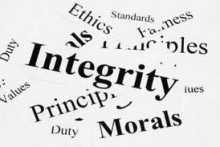 respect, you can’t influence. If you can’t influence, you can’t lead. In addition, when a leader lacks integrity, he gives employees permission to do the same. I’ve seen leaders compromise their integrity and moral values to be validated by others. I have personally seen this take place and the destruction it causes. A true leader will never comprise their moral integrity for validations.
 Learn to fail forward. Your approach to failure will have an impact on the outcome. Embrace the failure and use it to gain success.
 My goal is to read at least 1 new book per month. Reading gives me a lot of my ideas and creates a sense of knowledge for solving most problems. If I don’t know the answer, I read. Commit to attending meetings, conferences and training that stretches you and provides a greater expansion of your personal and professional knowledge.
 a better husband, father, GRANDFATHER (in April), professional, leader and overall a better person.
 communication. Throughout my career, I have come to realize that influential people and those who have great interactive skills are able to recognize the situation and adjust their approach quickly to enable the most effective outcome.
 ile trying to communicate. If we can maximize the use of these three components in a conversation then we can become very effective communicators resulting in a positive interaction and greater ability to influence.
 LEADER INFLUENCE